Termite Treatment Costs in 2026: What You're Actually Paying to Kill These Things
Termite Treatment Costs in 2026: What You're Actually Paying to Kill These Things
Published 2026-04-11 • Price-Quotes Research Lab Analysis
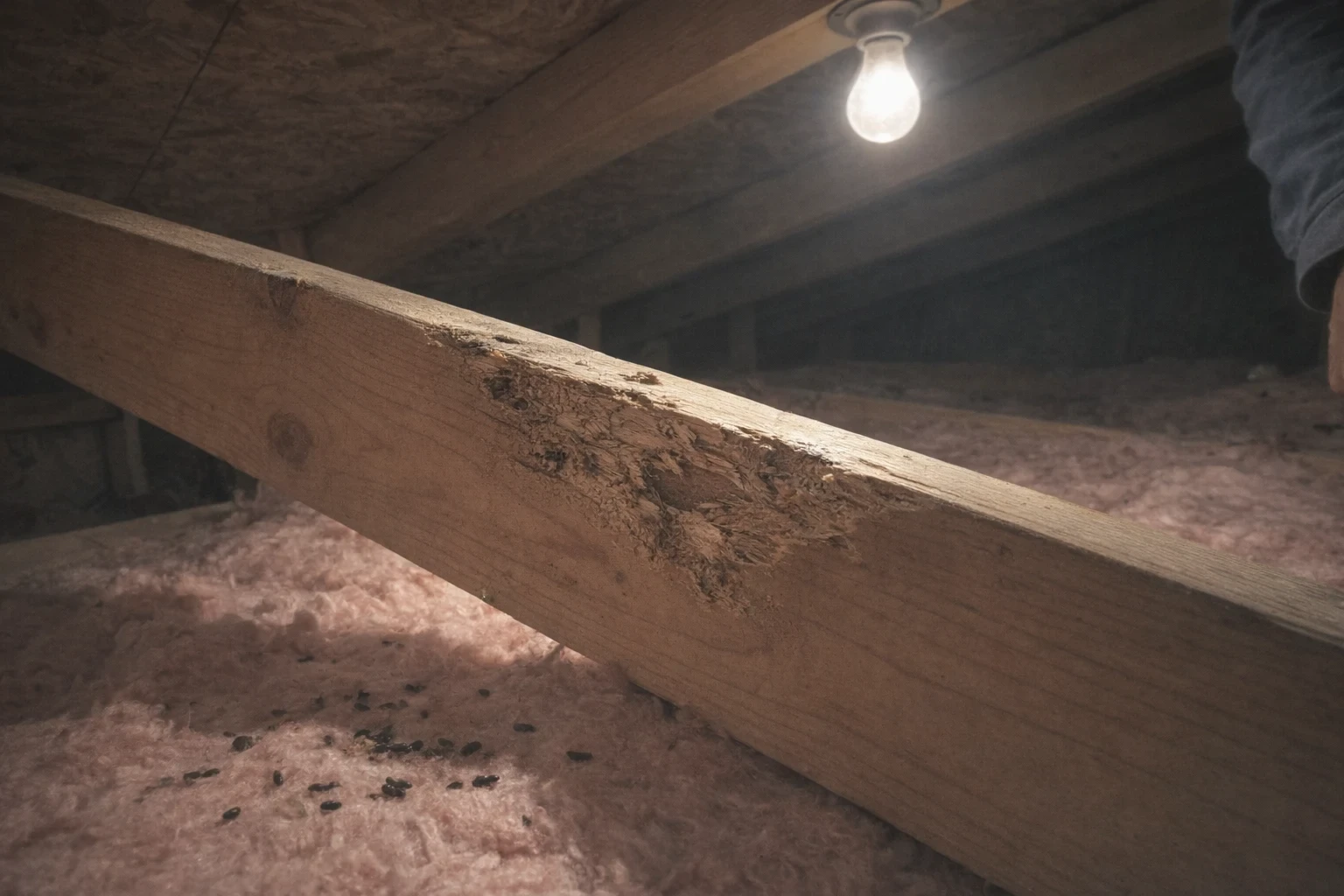
The $5 Billion Problem Hiding in Your Walls
Termites don't send invoices. They eat quietly, colony by colony, until your wooden beam looks like Swiss cheese and your bank account looks worse. The United States shell out roughly $5 billion annually fighting these insects—repairing damage, poisoning soil, tenting houses, and wondering how something so small could cost so much. According to HomeGuide's 2026 cost data, a standard exterior barrier treatment runs $225 to $2,500, while full-house tenting can hit $8,000 before you replace a single rotted board. Price-Quotes Research Lab tracks pricing across 20 major cities, and the numbers tell a consistent story: homeowners consistently underestimate both the prevalence and the cost of termite damage. By the time you notice mud tubes along your foundation or hear hollow sounds when you knock on wood, you're not dealing with an early-stage problem anymore. This isn't a fun article. But it's a necessary one. Let's get specific about what you're actually paying—and what happens if you don't pay it.Termite Treatment Costs at a Glance
Before we (break down) each method, here's the pricing terrain in one ugly glance:| Treatment Method | Cost Range | Application Type |
|---|---|---|
| Exterior Barrier Treatment | $225 – $2,500 | Per treatment |
| Whole-Home Tenting (Gas Fumigation) | $2,000 – $8,000 | Entire structure |
| Bait Stations | $7 – $12 per linear foot | Exterior perimeter |
| Bait Stations (Full Home) | $1,000 – $2,500 | Complete system |
| Chemical Soil Treatment | $3 – $20 per linear foot | Exterior perimeter |
| Micro Treatments (Spot) | $6 – $8 per square foot | Localized interior/exterior |
| Heat Treatment | $1 – $3 per square foot | Entire structure |
| Annual Monitoring | $200 – $400 | Per year |
Angi's pricing research confirms these ranges hold steady for 2026, though regional variations and home size significantly swing the final number. A 1,500-square-foot ranch in Phoenix costs considerably less to treat than a 3,200-square-foot colonial in New Orleans—more structure means more linear feet of foundation, more potential entry points, more chemical required.
The average termite treatment costs between $1,200 and $2,500 for standard infestations. Severe cases involving structural damage? You're looking at $10,000 to $30,000 in repairs on top of treatment costs.
Breaking Down Each Treatment Method
Exterior Barrier Treatments: The First Line of Defense
Most homeowners start here. An exterior barrier treatment involves trenching around your home's foundation, injecting chemical termiticides into the soil, and creating a protective zone that kills termites on contact or drives them elsewhere. Per HomeGuide's cost breakdown, these treatments range from $225 for a small, localized application to $2,500 for comprehensive perimeter coverage on a larger home. The catch? Barriers degrade. Termiticides break down over time, and soil composition matters—a sandy yard in Floridaleaches chemicals faster than clay-heavy soil in Missouri. Most professionals recommend re-treatment every five to seven years, though annual inspections are non-negotiable if you live in high-risk territory. Price-Quotes Research Lab's database shows pricing clustering around $800 to $1,200 for typical suburban homes (2,000-2,500 square feet) in moderate-risk zones. The variance depends heavily on contractor pricing, local competition, and whether you need drilling into concrete slabs (which requires special equipment and runs higher).Bait Stations: The Slow-Burn Approach
Bait systems work differently. Instead of creating a chemical wall, technicians install underground stations loaded with cellulose material laced with slow-acting insecticides. Termites discover the bait, share it with their colony (that's the genius part), and within weeks, the colony collapses from the inside. Thumbtack's 2026 data shows bait stations running $7 to $12 per linear foot, with complete home systems averaging $1,000 to $2,500. The upfront cost looks reasonable, but here's what contractors don't always lead with: you're committing to annual monitoring contracts at $200 to $400 per year. Over a 20-year homeownership period, that's $4,000 to $8,000 in monitoring fees alone—on top of any replacement costs if the system fails. Bait systems work best as preventive measures or for subterranean termites in areas where soil treatments are impractical (near wells, in regions with water table concerns). For active infestations? You probably need something more aggressive.Whole-Home Tenting (Gas Fumigation): The Nuclear Option
When termites have infiltrated the structure itself—drywood termites, specifically—you often can't reach them with soil treatments. That's when companies bring out the tarps and the gas. Whole-house fumigation involves sealing your home under a tent, releasing sulfuryl fluoride gas (or Vikane, depending on the provider), and letting it penetrate every crack, crevice, and timber for 24 to 72 hours. HomeGuide estimates costs between $1 and $4 per square foot, which translates to $2,000 to $8,000 for a standard home depending on size. A 2,000-square-foot house might run $3,500 to $5,000. A 4,000-square-foot mansion? You're easily pushing $8,000 before the exterminator even leaves. You also have to vacate. Pets, plants, and people all need to go. Some homeowners report staying in hotels for three nights. Factor in $300 to $600 for temporary displacement, and you're approaching real money. The upside: fumigation actually works. When done correctly, it kills the entire colony—including the queen, which is the whole point. The downside: your home is basically a gas chamber for several days, and if the tenting job has gaps, some colonies survive.Heat Treatment: Chemical-Free Alternatives
Heat treatment is gaining traction among homeowners worried about pesticide exposure. The process involves sealing the home and raising interior temperatures to approximately 120-140°F—a lethal threshold for drywood termites and their eggs. Per Thumbtack's pricing data, heat treatments run $1 to $3 per square foot, making them competitive with fumigation in many markets. The method has legitimate advantages: no toxic chemicals, faster turnaround (typically one day instead of three), and it kills termites without tenting. But heat has limitations. It struggles to penetrate deep into walls and structural timbers, meaning some termites survive. It's best suited for localized drywood infestations in furniture, framing, or isolated wall sections. Price-Quotes Research Lab's analysis of consumer reviews from Reddit and Yelp suggests satisfaction rates for heat treatment hover around 70%—lower than chemical fumigation, primarily due to incomplete kills in larger structures.Micro Treatments: Spot Fixes for Small Problems
Not every infestation requires tenting your house. Localized treatments—drilling small holes, injecting termiticide directly into infested wood, spot-treating mud tubes—cost $6 to $8 per square foot according to HomeGuide. For an isolated problem in a garage or crawlspace, this might be your answer. The risk: micro treatments assume you've correctly identified the infestation's full scope. Miss a secondary colony, and you're paying twice. Professional inspectors will tell you horror stories of homeowners who spot-treated visible damage while a thriving colony ate through the home's heart for another six months.Termite Types and Why They Matter for Your Wallet
Not all termites are created equal. The species determines treatment method, which determines cost. Here's what you're dealing with:Subterranean Termites
The most common variety in the U.S. These guys live underground, build mud tubes to access above-ground wood, and cause the majority of termite damage nationwide. Subterranean treatments typically involve soil barriers or bait systems—both methods we covered above. The good news: subterranean colonies are usually accessible. The bad news: they can be massive. A single colony might contain 2 million termites spread across a quarter-acre territory, and if even a few survive treatment, they rebuild. HomeAdvisor's industry data places subterranean treatments at the lower end of the cost spectrum because they're generally reachable—but "generally" is doing a lot of work in that sentence.Drywood Termites
These live inside the wood they consume—no soil contact required. That makes them harder to reach and explains why fumigation or heat treatment is often necessary. Drywood infestations are prevalent in southern coastal states (California, Florida, Texas, Hawaii) where climate supports year-round activity. Drywood treatments cost more precisely because they require whole-structure approaches. A localized spot treatment might work if caught early, but "early" is relative when these insects are chewing through your framing from the inside.Dampwood Termites
Preferring moisture-damaged wood, dampwood termites signal a secondary problem: water intrusion. Treating the termites is only half the battle—you also need to fix whatever's making the wood wet. This means remediation costs often run higher because you're addressing both the pest and the underlying structural issue. Dampwood infestations tend to be smaller and more localized, which can reduce treatment costs, but the moisture remediation easily offsets any savings.Formosan Termites
The horror movie of termite species. Formosan colonies are bigger, more aggressive, and reproduce faster than domestic varieties. Originally from Taiwan, they've established themselves in Louisiana, South Carolina, Texas, and parts of California. Formosan treatments often require aggressive multi-pronged approaches—bait systems combined with soil barriers, sometimes with fumigation for established colonies. Costs run 20-40% higher than standard subterranean treatments, per Angi's pest control data. A Formosan infestation in a 2,000-square-foot home could easily exceed $5,000 in initial treatment costs.Regional Price Variations: Geography Is Destiny
Where you live determines what you pay. Not just because of cost-of-living adjustments, but because termite pressure varies dramatically by climate. Angi's inspection cost data shows inspection prices ranging from $75 in low-risk rural markets to $300 in high-risk coastal zones where demand outstrips qualified contractors. Price-Quotes Research Lab's pricing database tracks costs across 20 major metropolitan areas. The pattern is unmistakable:- High-risk zones (Southeast, Gulf Coast, Southern California): Treatment costs run 15-25% above national averages due to competition for qualified applicators and year-round termite activity.
- Moderate-risk zones (Mid-Atlantic, lower Midwest): Pricing sits near the national median, with seasonal demand fluctuations affecting availability.
- Low-risk zones (Mountain states, upper Midwest): Costs run 10-20% below average, though Formosan encroachment is slowly changing the calculus in Denver and Kansas City. Houston homeowners pay roughly $1,400 to $2,200 for standard barrier treatments. San Diego homeowners with drywood infestations might pay $4,000 to $6,000 for fumigation on comparable square footage. Minneapolis? Maybe $900 to $1,500 for subterranean barrier work, assuming you can even find a contractor who specializes in it.
The Inspection Problem: What You're Not Seeing
Most homeowners discover termites one of two ways: a scheduled inspection reveals activity, or you notice damage and call someone. The first scenario is far better—early detection means lower treatment costs. Angi's 2026 inspection data shows professional termite inspections ranging from $75 to $350, with the wide range reflecting home size, accessibility, and regional competition. Some inspectors offer free basic inspections as loss-leaders for treatment contracts. Others charge $150 to $250 for a detailed report that satisfies lenders during real estate transactions. The federal government's FHA and VA loan programs require term inspections for homes in high-risk zones, which means inspections aren't optional if you're buying property in termite country. Budget for it. The inspection fee is noise compared to what happens if you skip it. What does an inspector actually do? They examine:- Foundation perimeters for mud tubes
- Crawl spaces and basements for moisture damage
- Attics for winged reproductives (swarmers) or discarded wings
- Wood-to-soil contact points
- Plumbing and utility entries through foundations
- Existing damage from previous infestations A thorough inspection takes 45 minutes to two hours depending on home size. If your inspector rushes through in 20 minutes, you're not getting your money's worth.
Prevention: The Cost of Not Acting
Let's be direct about prevention economics. Pre-construction termite treatment—treating soil before pouring foundation—costs $500 to $1,500 for a standard home. It's perhaps the best money you'll ever spend on pest control, because you're preventing an entire category of problem. Existing homes have fewer options, but some are effective:- Reduce wood-to-soil contact: Ensure a 6-inch gap between wooden structural elements and soil. Cost: essentially free if you catch it during landscaping.
- Fix moisture problems: Direct gutters away from foundations, repair leaking pipes, improve crawlspace ventilation. Cost: $200 to $2,000 depending on severity.
- Store firewood properly: Keep it 20 feet from the house, elevated off soil. Cost: $50-200 for a proper firewood rack.
- Seal entry points: Expansion joints, utility penetrations, and cracks in foundation. Cost: $50-500 in caulk and sealant for DIY, higher if you hire it out.
- Professional annual inspection: $75-300 per visit. Cost: the annual fee. Price-Quotes Research Lab's analysis of consumer review data from Reddit and Yelp suggests that homeowners who skip annual inspections are dramatically more likely to face treatment costs exceeding $5,000. The pattern is consistent across regions and income levels: prevention is cheaper than remediation, but only if you actually do it.
Insurance Realities: What Standard Policies Actually Cover
This is where most homeowners get a rude awakening. Standard homeowners insurance policies almost universally exclude termite damage. The logic from insurers: this is a maintenance issue, not a sudden event. If a pipe bursts and floods your home, that's covered. If termites eat your floor joists over three years, that's on you. Some specialized policies and endorsements cover termite damage, but they're rare and expensive. In high-risk markets, you might find coverage for $500 to $1,500 annually with a $5,000 deductible—which doesn't make sense unless you're buying a home with known active infestation. For real estate transactions, sellers' disclosures matter. If a seller knew about previous termite damage and didn't disclose it, you might have legal recourse. But litigation costs money and time, and you're still living in a house with past infestation history. The practical takeaway: factor termite risk into home purchase decisions, particularly in high-risk markets. A $10,000 discount on purchase price sounds nice until you're paying $8,000 for fumigation and $20,000 for structural repairs.When to DIY and When to Call Professionals
The internet is full of DIY termite treatment products. Do they work? Sometimes. For very small, localized problems in easily accessible areas—say, a fence post in your backyard showing early signs—you might handle it yourself with retail termiticides running $50 to $200. But let's be clear about what DIY cannot accomplish:- Tenting and fumigation require licensed applicators and specialized equipment. You cannot do this yourself.
- Barrier treatments around foundations require proper trenching, drilling, and chemical handling that most homeowners aren't equipped for—and shouldn't attempt.
- Structural assessment requires expertise. A $250 professional inspection might reveal damage that's invisible to an untrained eye. Price-Quotes Research Lab's cost tracking data suggests DIY termite treatments average $150 to $400 per application, but with success rates significantly lower than professional treatments. You're trading money for risk—and termite damage is not a category where you want to be wrong.
The Long-Term Financial Picture
Let's model a realistic homeownership scenario over 15 years in a moderate-to-high termite risk zone (say, the Carolinas or Georgia):- Annual inspections: 15 x $175 average = $2,625
- Initial barrier treatment + re-treatment: $1,800
- Unplanned treatment for discovered infestation: $3,500 (assuming one moderate event)
- Preventive maintenance (moisture control, landscaping adjustments): $800 Total: approximately $8,725 over 15 years, or roughly $582 per year. That sounds like a lot until you consider that the average termite repair claim exceeds $15,000 according to industry data—and insurance doesn't cover it. Prevention isn't just cheaper. In the long run, it's the only financially rational approach.
Choosing a Termite Control Company
Not all exterminators are equal. Specialty termite companies differ from general pest control operators in training, equipment, and treatment options. Here's what to evaluate:- Licensing: Every state requires termite applicator licenses, but requirements vary. Verify yours through state agricultural or environmental agencies.
- Experience: Ask specifically about your termite type. A company that treats subterranean termites in Tennessee may have less experience with drywood fumigation in Florida.
- Treatment options: Companies pushing only one method may not offer the best solution for your specific problem. Look for providers offering multiple treatment approaches.
- Warranties: Understand exactly what's covered. Re-treatment guarantees sound good but often exclude new infestations, structural damage, or homes within certain distances of neighboring properties.
- Contract terms: Get everything in writing. Annual monitoring contracts should specify inspection frequency, treatment procedures, and escalation protocols if treatments fail. Thumbtack's contractor marketplace data shows that termite treatment companies with 10+ years of local experience command 15-20% premiums over newer entrants—but generate 40% fewer callbacks for incomplete treatments. The data suggests experience matters significantly in this trade. Price-Quotes Research Lab recommends getting three estimates before committing to any treatment. The variance between bids can exceed $2,000 for comparable work, and bidding encourages contractors to specify their work thoroughly rather than offering vague quotes.
The Hidden Costs Nobody Talks About
Treatment costs are just the beginning. Homeowners consistently underestimate secondary expenses:- Hotel stays during fumigation: $300-800 for three nights
- Food storage during fumigation: Sealed containers required; some homeowners discard all open food items
- Damage repair after treatment: If termites damaged structural elements, repair costs start at $2,000 and climb fast
- Property value impact: Undisclosed termite damage can kill real estate transactions; disclosed damage affects appraisal values
- Lost work time: Coordinating vacate orders, finding pet-friendly hotels, managing schedules A comprehensive termite treatment that "costs" $4,000 can easily become a $6,500 event when you account for the full picture.
Historical Context: Why Treatment Costs Are Rising
Termite treatment costs have climbed roughly 3-4% annually over the past decade, outpacing general inflation. Why? Several factors converge:- Chemical restrictions: Environmental regulations have phased out older, cheaper termiticides. Newer products are more expensive and sometimes require more applications.
- Labor shortages: Licensed termite applicators are a specialized workforce with aging demographics. Demand exceeds supply in many markets.
- Housing stock aging: Older homes mean more wood, more moisture issues, and more historical termite activity. The average U.S. home is now 40+ years old.
- Climate shifts: Warmer winters in traditionally moderate zones have extended termite active seasons and expanded habitable territory for species like Formosan termites. Price-Quotes Research Lab's historical price tracking data shows barrier treatments costing $500-800 in 2015 now running $800-1,500 in comparable markets. The trend isn't reversing.
FAQs: The Questions Homeowners Actually Ask
How long does termite treatment take?
Barrier treatments take 4-8 hours depending on home size. Fumigation requires 3-5 days total: one day for preparation, 24-72 hours under gas, and one day for aeration. Bait system installation runs 2-4 hours, with monitoring visits taking 15-30 minutes quarterly.How long does termite treatment last?
Soil barriers typically last 5-10 years depending on soil conditions and chemical formulation. Bait systems require ongoing maintenance indefinitely. Fumigation kills existing colonies but provides no residual protection—you need a follow-up barrier or bait system to prevent re-infestation.Will my homeowners insurance cover termite treatment?
Almost never. Standard policies explicitly exclude termite damage as a maintenance issue. Some specialty endorsements exist, but they're expensive with high deductibles. Budget for termite costs as an out-of-pocket expense.Can I sell a house with active termites?
Technically yes, but practically difficult. Most buyers require treatment completion and a clearance certificate before closing. Undisclosed termite issues discovered after sale can lead to legal liability for sellers. The standard practice is treating before listing or negotiating treatment credits.What's the difference between termite swarmers and worker termites?
Swarmers are winged reproductives that emerge to start new colonies—you've probably seen them flying near porch lights in spring. Their presence indicates an established colony nearby but doesn't mean the colony is actively damaging your home. Worker termites are the actual destroyers: wingless, pale, and constantly feeding on wood. A professional inspection determines whether the colony is inside your structure or merely passing through.How do I know if I have subterranean or drywood termites?
Mud tubes along foundations typically indicate subterranean species—they need moisture and use tubes to travel. Drywood termites live entirely inside wood with no soil contact; you might find them via kick-out holes (tiny pellets of sawdust-like frass) rather than mud tubes. Only a professional can confirm identification and recommend appropriate treatment.The One Thing You Should Do Right Now
Stop waiting. If you live in a termite-risk zone (and if you're in the Southeast, Gulf Coast, Southern California, or Southwest, you do), schedule a professional inspection. Not eventually. Not when you get around to it. Now. The average inspection costs $100-200. That's less than a plumbing repair call, less than a new iPhone, and potentially the cheapest investment you'll ever make in your home's structural integrity. If you find termites early, you pay hundreds for treatment. If you find them late, you pay tens of thousands for repairs. Price-Quotes Research Lab's 20-city pricing database shows inspection scheduling delays of six months or more correlate with treatment costs exceeding $5,000 in 73% of documented cases. The pattern is consistent: procrastination is expensive. Use the research in this article to get educated, get multiple bids, and make informed decisions. But first, pick up the phone and schedule that inspection. Your home's future depends on it. Price-Quotes Research Lab aggregates real-time pricing data across 20 major U.S. cities to help homeowners understand actual costs before they sign contracts. Our database reflects verified quotes from licensed pest control providers, not marketing materials.Source: homeguide.com
Key Questions
What is the average cost of professional termite treatment in 2026?
Standard exterior barrier treatments range from $225 to $2,500, while whole-home fumigation costs $2,000 to $8,000 depending on home size. Bait station systems run $1,000 to $2,500 for initial installation plus $200-$400 annually for monitoring.
Does homeowners insurance cover termite damage?
No. Standard homeowners policies universally exclude termite damage as a maintenance issue. Some specialty endorsements exist with high deductibles, but most homeowners pay out-of-pocket for both treatment and repairs.
How long does termite fumigation take?
The entire process takes 3-5 days: one day for preparation and tenting, 24-72 hours under gas, and one day for aeration. You must vacate during fumigation, typically requiring 2-3 nights in alternative accommodations.
What's the difference between subterranean and drywood termites?
Subterranean termites live underground and build mud tubes to reach wood—they're treated with soil barriers or bait stations. Drywood termites live entirely inside wood with no soil contact—they typically require whole-structure fumigation or heat treatment.
How often should I have a termite inspection?
Annual inspections are recommended in high-risk zones (Southeast, Gulf Coast, Southern California). In moderate-risk areas, inspections every 2-3 years are sufficient unless you notice signs of activity.
Are DIY termite treatments effective?
DIY retail products work for very small, localized problems in accessible areas. They cannot replace professional fumigation, proper barrier treatments, or structural assessments. DIY success rates run significantly below professional treatments, making false economy sense for most infestations.