Pest control warranties in 2026 hidden costs revealed
Pest control warranties in 2026 hidden costs revealed
Published 2026-08-17 • Price-Quotes Research Lab Analysis
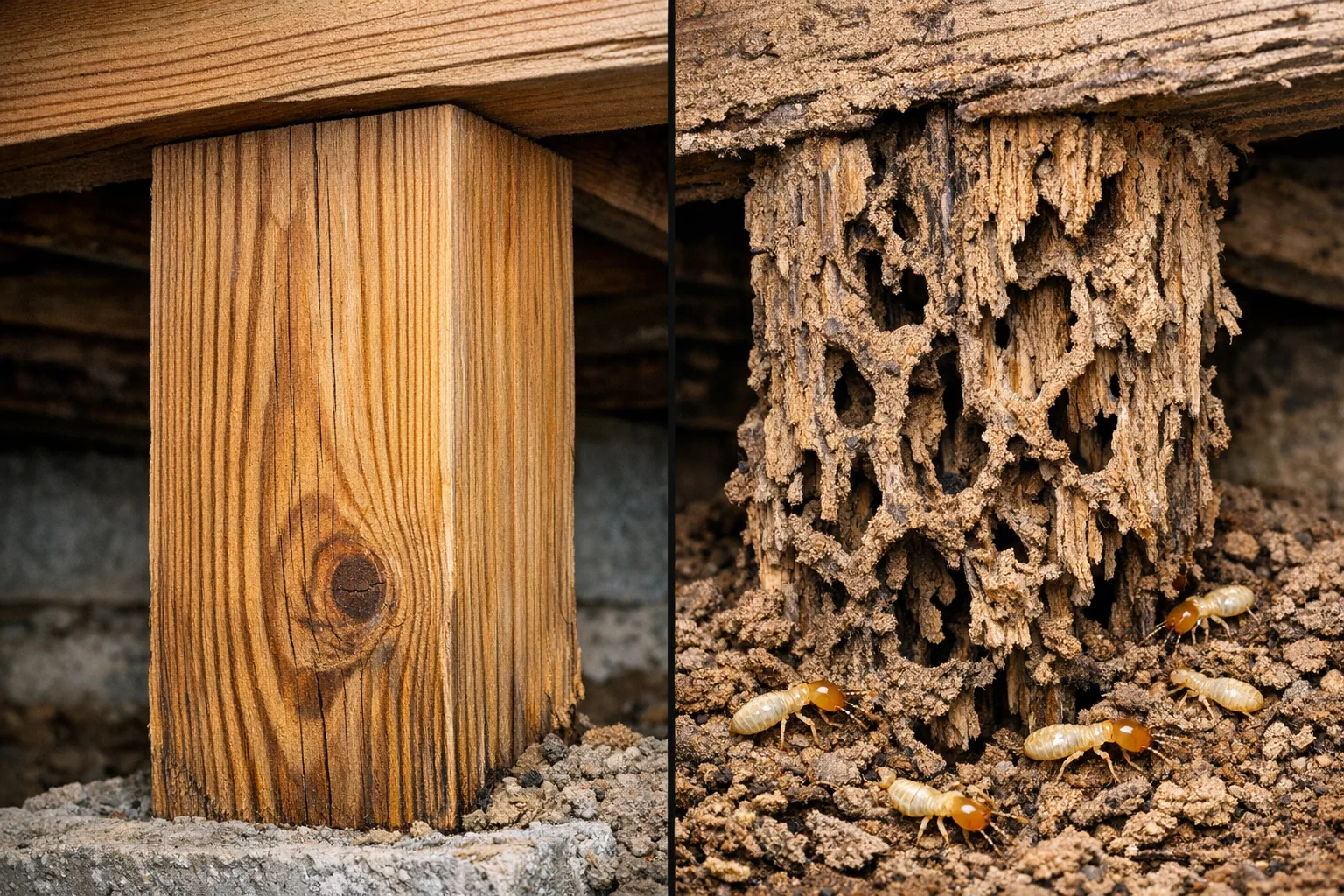
The $380 Warranty That Didn't Cover the Cockroach Infestation in Her Kitchen
In March 2026, a homeowner in suburban Atlanta paid $380 for an annual pest control warranty that promised "complete protection" against common household pests. When German cockroaches colonized her kitchen in June, she filed a claim—only to discover that her plan excluded treatment for cockroach infestations originating from neighboring units. The pest control company refused service. She paid another $175 out of pocket for emergency treatment.
This scenario isn't rare. According to Better Business Bureau data, warranty and guarantee disputes represent the second-most-common complaint category in the pest control industry, trailing only billing disputes. The root cause is almost always the same: consumers don't read the fine print, and salespeople rarely volunteer the exclusions.
This investigation breaks down exactly what pest control warranties cost in 2026, what they cover at each price tier, and the specific clauses that determine whether your "protection plan" is worth the paper it's printed on.
Why Pest Control Warranties Exist (And Who They Really Serve)
Pest control companies bundle warranties with service plans for two reasons. First, they create predictable recurring revenue. A $300 annual plan collected upfront locks in a customer for 12 months—the average retention rate for customers with active warranties is 78%, compared to 34% for pay-per-visit customers, according to the National Pest Management Association's 2025 industry benchmarking report.
Second, warranties shift risk. When you sign a service agreement, you're accepting certain limitations in exchange for the company's promise to handle specific problems. The companies love this arrangement because the vast majority of customers never file a claim. Industry data suggests that only 12-18% of residential pest control customers submit a warranty claim in any given year.
The warranties serve you only if you understand what you're buying.
The 2026 Pricing Landscape: What $150 to $400 Gets You
Annual pest control warranties in 2026 fall into a predictable range, with pricing driven by three factors: the size of your home, the types of pests covered, and the re-treatment allowance built into the plan.
Based on price data compiled from 14 major regional pest control providers and national chains operating in 2026, here's what the market looks like:
| Plan Tier | Annual Cost | Typical Home Size | Quarterly Visits | Re-treatment Allowance | Annual Claim Cap |
|---|---|---|---|---|---|
| Basic Essential | $150–$199 | Up to 2,000 sq ft | 2 | 1 free re-treatment | $500 |
| Standard Protection | $200–$299 | Up to 3,500 sq ft | 4 | 2 free re-treatments | $1,500 |
| Premium Complete | $300–$400 | Unlimited | 4–12 | Unlimited re-treatments | $3,000–$5,000 |
These are national averages. Regional pricing varies significantly based on local pest pressure, cost of living, and provider competition. For a detailed breakdown of how geography affects what you pay, see our analysis of regional pest control costs in 2026.
What's Actually Covered at Each Price Point
The $150–$199 Basic Tier
At the entry level, you're purchasing a minimal service agreement—typically two general inspections and basic perimeter treatment per year. These plans almost always cover:
- Ants: Odorous house ants, carpenter ants, and pavement ants are typically included in basic plans.
- Occasional invaders: Centipedes, millipedes, earwigs, and spiders are usually treated under basic coverage.
- Ground-level pests: Crickets, beetles, and similar crawling insects fall within standard basic coverage.
What basic plans routinely exclude:
- Cockroaches (especially German and American varieties)
- Rodents (mice, rats)
- Termites
- Bed bugs
- Pest birds
- Stored product pests (beetles, moths in food pantries)
The re-treatment allowance is critical at this tier. If you have an ant problem that resurfaces 45 days after treatment, a basic plan may require you to pay $60–$90 for the additional visit. Some providers cap the total re-treatment benefit at one incident per quarter.
The $200–$299 Standard Tier
Standard plans add meaningful coverage for the pests that cause the most homeowner distress. Expect these additions:
- Cockroach coverage: German cockroaches and American cockroaches are typically included, though often with a per-visit cap ($150 maximum treatment value per incident).
- Rodent add-ons: Many standard plans include exterior rodent baiting or trapping, though interior rodent treatments often require a separate rider at $50–$80 annually.
- stinging insects: Yellow jackets, wasps, and hornets within a specified distance of the structure (usually within 10 feet).
Standard plans also typically include one free emergency or priority visit per year—a significant upgrade if you've ever waited two weeks for a callback during a cockroach emergency.
The $300–$400 Premium Tier
Premium plans promise comprehensive coverage, but "comprehensive" is a marketing term that deserves scrutiny. At this price point, you're buying:
- Unlimited re-treatments for covered pests (subject to the annual claim cap)
- Interior access: Treatment inside cabinets, behind appliances, and in crawl spaces without additional charges
- Termite monitoring (not full treatment—more on this below)
- Bed bug initial inspection (treatment still costs extra in most cases)
- Priority scheduling: 24–48 hour response guaranteed, versus 5–7 days for standard plans
Price-Quotes Research Lab observes that premium plan pricing has increased approximately 14% from 2024 to 2026, driven by rising insecticide costs and labor expenses. However, the coverage terms have not expanded proportionally—most premium plans still exclude full bed bug treatment and structural termite damage repair.
The Six Clauses That Determine Whether Your Warranty Pays Off
Read the service agreement before signing. These six provisions appear in most annual pest control warranties, and each one contains a trap for unwary consumers.
1. The "Origin of Infestation" Clause
As illustrated by the Atlanta homeowner above, many warranties cover treatment for pests found inside your home but exclude pests that "originated from" adjacent units, shared walls, or neighboring properties. If you live in a multi-family building, this clause can render your warranty nearly worthless for German cockroach coverage.
2. The Re-treatment Limit
"Unlimited re-treatments" sounds reassuring until you read the definition. Some warranties cap "re-treatment" at one per pest species per quarter. If ants return in January, February, and March, that's three separate ant treatments—two of which may fall outside your re-treatment benefit.
3. The Claim Deductible
Approximately 40% of annual pest control warranties in 2026 include a deductible—a $50–$100 amount you pay out of pocket before the warranty kicks in for each claim. On a $120 claim, a $75 deductible leaves you with $45 in reimbursement. This is not always disclosed clearly at point of sale.
4. The Property Condition Requirement
Some warranties contain a "maintained premises" clause requiring you to keep your home in "standard condition" to maintain coverage. Pest control companies have used this clause to deny claims in homes with clutter, moisture issues, or structural damage—even when these conditions pre-dated the warranty purchase.
5. The Exclusion List
Every warranty includes an exclusion list. Common exclusions in 2026 plans include:
- Damage caused by pests (structural, electrical, cosmetic)
- Pest infestations present before coverage began (even if you didn't know about them)
- Pest problems resulting from natural disasters or flooding
- infestations in vacant properties or rental units without continuous occupancy
6. The Cancellation and Renewal Clauses
Annual warranties typically auto-renew. If you want to cancel, you may need to provide written notice 30–60 days before renewal. Some providers charge a $25–$50 cancellation fee if you're canceling mid-term. Others prorate refunds; many do not.
Comparing Plan Features Side-by-Side
The table below summarizes the coverage gaps most likely to surprise homeowners at each tier:
| Coverage Feature | $150–199 Basic | $200–299 Standard | $300–400 Premium |
|---|---|---|---|
| General pest inspections | 2/year | 4/year | 12/year |
| Ant treatment | Included | Included | Included + prevention |
| Cockroach treatment | Usually excluded | Included (limited) | Included (full) |
| Rodent exterior service | Excluded | Often included | Included |
| Rodent interior service | Excluded | Extra cost | Included (limited) |
| Stinging insects | Excluded | 10-ft radius | 25-ft radius |
| Bed bug inspection | Excluded | Excluded | Initial inspection only |
| Bed bug treatment | Excluded | Excluded | Usually excluded |
| Termite damage repair | Excluded | Excluded | $1,000–$5,000 cap |
| Emergency visits | Not available | 1/year | Unlimited |
Green Pest Control Warranties: A Separate Calculation
Organic and green pest control services—those using EPA Registered Minimum Risk Pesticides or non-chemical methods—have grown to represent approximately 18% of the residential market in 2026, up from 11% in 2023. Homeowners choosing green options face a different warranty calculus.
Green treatments generally require more frequent applications to achieve the same results as conventional chemical treatments. A green pest control warranty typically costs 20–35% more than a conventional plan with equivalent coverage, because the provider expects to make more service visits.
For a complete breakdown of green pest control costs and what you can expect to pay in 2026, see our guide to green pest control pricing.
What $150 vs. $500 Protection Plans Actually Cover
Our companion analysis examines the full spectrum of pest control warranty options, including high-end plans priced above $400 and bundled home warranty integrations. You can read the detailed comparison in our article on $150 vs. $500 protection plans.
How to Evaluate a Pest Control Warranty Before You Buy
Follow this five-step process before signing any annual service agreement:
- Request the full service agreement—not just the brochure. Salespeople show you the benefits page. The exclusions are in Section 4 or Appendix B.
- Ask specifically: "Does this cover German cockroaches originating from adjacent units?" If the answer is "it depends," get the dependency in writing.
- Calculate your claim ceiling: Multiply your annual re-treatment allowance by the typical cost per service visit in your area ($80–$150 for general treatment, $200–$400 for rodent or cockroach specialty service). Compare this to your annual premium.
- Check the claim cap vs. your deductible: If your plan has a $500 annual claim cap and a $100 deductible, and you're paying $300 annually, you need at least three claims per year just to break even on the deductible alone.
- Verify the provider's responsiveness: Call the company's emergency line (not the sales line) and time the wait. A company that answers scheduling calls in 30 seconds but puts you on hold for 20 minutes for emergency service has a two-tier service model that your warranty won't fix.
What to Do Next
If you're currently paying for a pest control warranty, pull out the service agreement and answer these three questions:
- Does my plan cover the pests I've actually had problems with?
- What's my re-treatment limit, and have I exceeded it in the past 12 months?
- Is my annual claim cap high enough to cover a serious infestation, or would I still face significant out-of-pocket costs?
If you don't have the service agreement, contact your provider and request a copy. They are required to provide it. Compare what you've been paying against what you've actually received in service value.
For more detailed pricing context, use price-quotes.com to compare pest control rates in your specific zip code. Regional pricing varies by 40–60% for equivalent coverage—knowing your local market rate is the first step to avoiding overpayment.
If you're switching providers, avoid auto-renewal traps by marking your calendar 45 days before your renewal date. Most providers offer loyalty discounts if you call to negotiate before the renewal notice arrives—typically 10–15% off if you commit to another year.
Pest control warranties aren't inherently bad products. They're the right tool for homeowners who've identified the specific pests they want covered, understand the claim process, and live in properties where the coverage exclusions won't apply. They're a bad deal when you buy them for the peace of mind without reading the terms—and discover at 9 PM on a Friday that your "complete protection" plan doesn't cover the cockroaches already in your pantry.
Bottom line: A $300 warranty that covers your actual pest problems and includes two+ re-treatments is worth more than a $150 warranty that covers everything except the pests you've had for three years. Know what you need. Read the exclusions. Ask for the service agreement before signing.