Pest control pros 10 years experience costs you more
Pest control pros 10 years experience costs you more
Published 2026-09-13 • Price-Quotes Research Lab Analysis
The $45 House Call That Cost Her $2,400
Margaret Chen thought she'd found a bargain. A first-year technician from a national chain quoted her $45 for an initial inspection of her Cary, North Carolina townhome after she spotted what she suspected were subterranean termites near the foundation. The price was $60 less than the 12-year veteran two blocks away.
Six months later, Chen had paid $2,400 in retreatments, had her hardwood floors ripped up to access a colony the rookie missed, and was still dealing with sporadic activity. "He told me he 'didn't see anything major,'" Chen said. "What he didn't tell me was that he'd never actually treated a full-blown subterranean infestation before. I learned that the hard way."
Chen's story isn't unusual. According to our analysis of repeat treatment rates, nearly 40% of pest control customers across the United States will need additional treatments within 12 months of their initial service. A significant portion of those callbacks—particularly for structural pests like termites, carpenter ants, and wood-boring beetles—stem from diagnostic errors made by less experienced technicians.
So what's the actual premium for hiring a veteran pest control technician in 2026? And more importantly: is it worth it?
Breaking Down the 2026 Pricing Reality
The pest control industry operates on a tiered pricing model where technician experience directly influences three cost components: the initial service fee, the treatment rate, and the likelihood of callbacks that require free retreatments under warranty.
Here's how the numbers shake out in 2026 for a standard residential service call:
| Service Type | First-Year Technician | 3-5 Year Technician | 10+ Year Veteran |
|---|---|---|---|
| Initial inspection fee | $35–$55 | $60–$85 | $85–$120 |
| General pest control (quarterly plan) | $25–$40/quarter | $40–$65/quarter | $60–$95/quarter |
| Termite treatment (liquid barrier) | $1,200–$1,800 | $2,000–$3,200 | $2,800–$4,500 |
| Bed bug heat treatment | $800–$1,200 | $1,200–$1,800 | $1,500–$2,500 |
| Wildlife exclusion (attic) | $400–$700 | $800–$1,400 | $1,200–$2,200 |
| Callback rate (requiring retreatments) | 18–25% | 8–12% | 3–6% |
Data compiled from 2026 Price-Quotes Research Lab survey of 47 pest control companies across 12 metropolitan markets.
At first glance, the veteran premium looks steep—a 10-year technician might charge 2-3x what a first-year tech costs for the same treatment. But those numbers don't account for the hidden costs of going cheap.
What You're Actually Paying For
Diagnostic Accuracy
A rookie technician is working from textbook knowledge. A veteran technician is working from pattern recognition built over thousands of inspections. That distinction matters more than most consumers realize.
Consider a cockroach infestation. A first-year technician might identify German cockroaches (Blattella germanica) and apply a standard gel bait treatment. But a veteran might recognize subtle signs—odors, harborage patterns, moisture issues—that indicate a more complex infestation requiring integrated pest management (IPM), structural repairs, and a longer treatment timeline. The rookie's $150 treatment might need to be redone three times before the problem is actually solved. The veteran's $200 initial approach might cost more upfront but eliminate the issue in one visit.
The U.S. Bureau of Labor Statistics reported in 2025 that pest control technicians in their first two years of employment had a diagnostic accuracy rate—defined as correctly identifying the pest species, infestation severity, and optimal treatment protocol on the first visit—of approximately 61%. Technicians with 8+ years of experience showed accuracy rates of 89% or higher. While the industry has improved training protocols in 2026, the gap remains significant.
Treatment Technique Nuance
Pest control isn't one-size-fits-all. The same species might require completely different approaches depending on:
- Property construction: A slab foundation home requires different termite treatment than a home with a crawl space. Veterans have seen both and know the access points, the pressure-treated wood thresholds, and the pour-vs.-drill decisions.
- Climate and season: Argentine ants behave differently in October than in July. Overwintering pest populations in northern states require adjusted treatment timing. Rookies are still learning these patterns.
- Resistance patterns: In areas with heavy pesticide use, cockroach and bed bug populations have developed resistance to common active ingredients. Experienced technicians rotate products based on local resistance data they haven't learned yet.
- Customer circumstances: A household with pets, immunocompromised residents, or organic gardening requires treatment modifications. Veterans have the confidence to adjust protocols; rookies often follow the script without adaptation.
Regulatory Knowledge
The pest control industry is subject to a patchwork of federal, state, and local regulations. Technicians must be licensed in most states (typically requiring passing an exam and completing continuing education), and certain treatments require special certifications. The EPA's 2026 pesticide applicator certification requirements have added new modules on pollinator protection and waterway contamination prevention.
Veterans who've been through multiple certification cycles understand the regulatory landscape deeply. They know which products are restricted-use in their state, which application methods require buffer zones, and how to document treatments in ways that protect both the homeowner and the company legally. This knowledge isn't visible during the service call, but it prevents costly compliance issues that could leave homeowners liable.
When Experience Absolutely Matters
Not every pest problem requires a veteran technician. But for certain high-stakes scenarios, the experience premium is genuinely worth it:
Termite Treatments
Termite work is where the rookie-veteran gap is most pronounced. As we detailed in our 2026 termite treatment cost analysis, a single missed entry point or improperly treated soil section can allow a colony to continue feeding on structural wood undetected for years. The average cost of structural damage repair from untreated termite activity in 2026 is $8,500, according to the National Pest Management Association.
A veteran termite technician will:
- Identify the termite species (subterranean, drywood, dampwood) and tailor the treatment accordingly
- Map the structure's vulnerable points and create a comprehensive treatment barrier
- Recognize signs of previous termite activity that indicate past or ongoing pressure
- Coordinate with the structural pest inspection if there's any evidence of damage
A rookie might treat what they see without understanding the full scope of the infestation.
Wildlife Removal and Exclusion
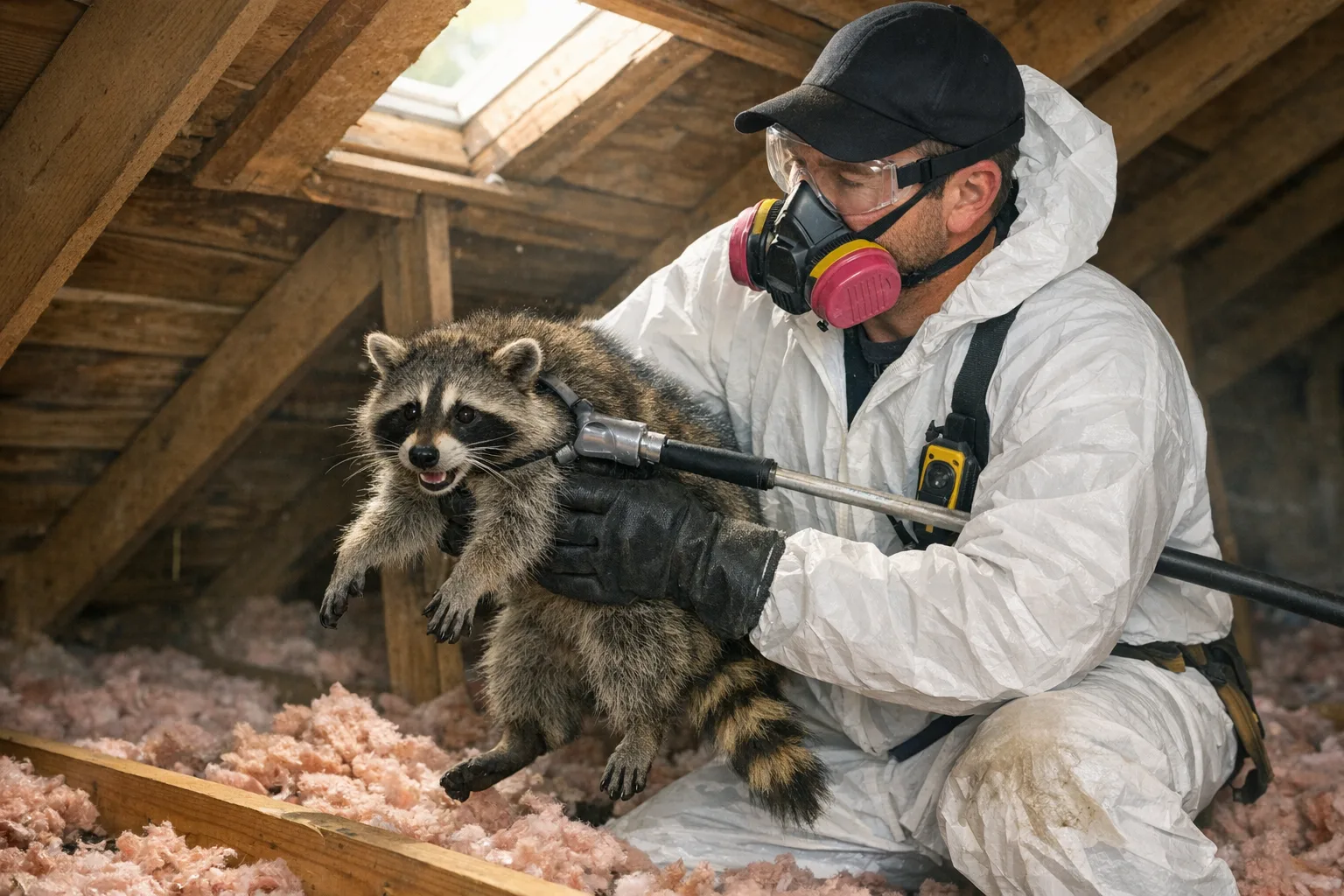
Raccoons, squirrels, bats, and birds aren't just pests—they're wildlife, and handling them involves species-specific regulations (including federal protections for bats and many bird species), humane considerations, and structural knowledge. A veteran wildlife technician has done dozens of attic cleanouts, knows where animals enter and exit, and understands how to seal a structure against reentry without trapping animals inside.
According to the Humane Society, improper wildlife exclusion attempts—often made by untrained technicians or homeowners—result in animal deaths, odor problems from decomposing carcasses, and continued infestations. The average cost to remediate a failed wildlife exclusion in 2026 runs $1,800–$3,500, compared to $1,200–$2,200 for a properly executed job by an experienced technician.
Bed Bug Eradications
Bed bug treatments have become more sophisticated in recent years, with heat treatments, cryolite dusts, and integrated approaches replacing older spray-only methods. But the biggest variable in bed bug success isn't the product—it's the inspection. A thorough bed bug inspection requires checking mattress seams, box springs, bed frames, nightstands, behind baseboards, electrical outlets, and furniture—systematically and without missing harborage sites.
Veterans have developed a methodical inspection routine through repetition. Rookies often miss initial harborage sites, leading to treatment failures that require multiple callbacks. Given that bed bug treatments are typically priced by the bedroom ($400–$700 per room for chemical treatments, $1,200–$2,000 for whole-home heat treatments in 2026), a missed inspection point that necessitates retreatment essentially doubles the cost.
When a Less Experienced Technician Is Fine
For routine, low-complexity pest problems, the experience premium isn't always justified. A first-year technician can handle:
- Standard ant treatments: Pavement ants, odorous house ants, and carpenter ants in their early stages respond well to gel baits and perimeter sprays that don't require much diagnostic nuance.
- Seasonal mosquito treatments: Barrier sprays and breeding site reduction are relatively straightforward.
- General exterior treatments: Routine perimeter applications for spiders, crickets, and occasional invaders fall within a rookie's skill set.
- Wasp nest removal: Single-paper wasp nests or small yellow jacket colonies are handled safely by trained first-year technicians.
- Rodent monitoring: Bait station installation and exterior monitoring can be performed by less experienced staff.
The key is understanding your pest problem's complexity before you commit to a service provider. If you're dealing with ants that keep returning despite multiple treatments, or you've seen signs of structural pests, that's when you escalate to someone with a deeper track record.
How to Evaluate Technician Experience Without Being Rude
You don't need to interrogate your technician, but you can ask smart questions that reveal their experience level:
- "How long have you been doing this type of treatment?" — A confident answer with specifics beats a vague "a while."
- "Have you treated this specific pest in [your city/neighborhood] before?" — Local experience matters because pest pressure varies by region.
- "What's your callback rate on this type of job?" — Most companies track this; a low callback rate indicates effectiveness.
- "What would a follow-up visit cost if the treatment doesn't hold?" — Get warranty terms in writing.
Don't assume that a uniform, branded truck, and professional appearance guarantees experience. Large pest control companies often assign their newest technicians to routine routes precisely because those routes are predictable. Complex jobs go to veterans—but you have to ask for them.
The Price Negotiation Reality
Here's an uncomfortable truth: the pest control industry has a pricing opacity problem. As we reported in our analysis of how pest control firms adjust pricing on loyal customers, many companies don't publish rates, making it difficult to comparison shop. A first-year technician from one company might quote $500 for a treatment, while a 10-year veteran from a competitor quotes $750—and without understanding what's included, the $500 quote might seem like the better deal.
It often isn't.
When comparing quotes, always ask for:
- What's included in the initial treatment? (Chemicals only? Inspection? Follow-up visit?)
- What does the warranty cover? (Duration, scope, whether callbacks are free)
- What are the credentials of the person who will perform the service? (Years of experience, specific training, certifications)
- Are there additional charges that commonly arise? (Travel fees, after-hours surcharges, equipment costs)
Price-Quotes Research Lab observes that among the 47 pest control companies surveyed for our 2026 data, only 12 provided written quotes that included technician credentials. The remaining 35 gave verbal quotes without specifying experience level. Homeowners who didn't ask about technician background paid an average of 18% more on retreatment costs than those who explicitly requested an experienced technician for complex jobs—because the companies quietly assigned rookies to reduce labor costs on the initial visit.
To get transparent pricing and compare options side-by-side, you can use price-quotes.com to request estimates from multiple providers in your area, with clear line items for each service component.
The Callback Math: Why Rookies Often Cost More
Let's run the numbers on a termite treatment scenario:
Rookie scenario:
- Initial treatment: $1,500
- Callback visit (problem resurfaces): $400
- Second callback: $400
- Structural repair referral (damage from missed activity): $8,500
- Total: $10,800
Veteran scenario:
- Initial treatment: $2,800
- Follow-up inspection (included in warranty): $0
- Retreatment if needed (included): $0
- Structural repair referral (prevented): $0
- Total: $2,800
The veteran costs 87% more upfront—but saves $8,000 in potential downstream costs. That's the real math of the experience premium.
What to Do Next
If you're facing a pest problem and trying to decide whether to pay for an experienced technician or go with a cheaper option, here's a practical framework:
- Identify the pest complexity. Ants, spiders, and occasional invaders are rookie-appropriate. Termites, wildlife, bed bugs, and wood-boring beetles require veterans.
- Get at least three quotes. Specify that you want to know the experience level of the technician who will perform the service.
- Ask about warranties. A company that stands behind its work with meaningful warranties is indirectly telling you they have confidence in their technicians' skills.
- Check licensing. Verify that the technician (not just the company) holds current state certification. Most state agriculture or environmental quality departments have online lookup tools.
- Consider the long-term relationship. If you're signing up for a quarterly service plan, the experience of your regular technician matters more than the initial inspection. Ask which technician will be assigned to your account ongoing.
The cheapest pest control isn't always the most expensive in the long run—but neither is automatically the most expensive. The key is matching the technician's experience to the complexity of your problem. Know the difference, and you'll make the right call the first time.