Pest control prices surge 40-60% as deals vanish in 2026
Pest control prices surge 40-60% as deals vanish in 2026
Published 2026-07-17 • Price-Quotes Research Lab Analysis
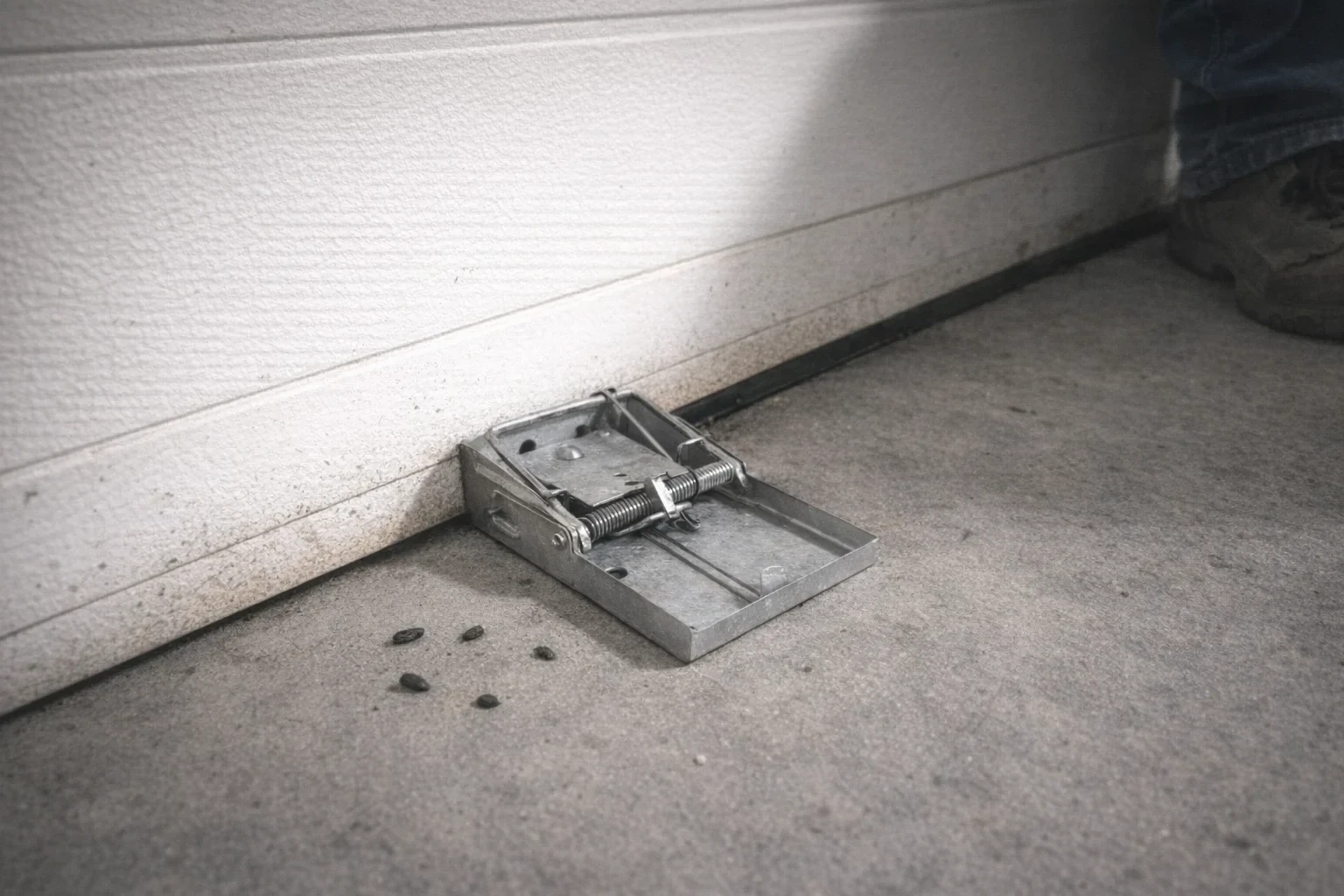
The Bill That Made My Neighbor Spit Out His Coffee
Last March, Harold Mendez, a retired accountant in suburban Phoenix, thought he'd snagged a deal. His new pest control provider offered quarterly treatments for $29.99 per month — a full year locked in at that rate. "It was the first time I ever called a company and they actually lowered my price," he told me. "I felt like I'd won something."
Twelve months later, Harold's renewal notice arrived. The same quarterly service, the same technician, the same treatment protocol. The new price: $47.50 per month.
That's a 58.5% increase. Overnight. Without warning.
"I called to complain, and they said the promotional rate had expired," Harold said. "Promotional rate. Like it was some kind of sale at a shoe store."
Harold's story isn't an anomaly. It's the industry standard.
Price-Quotes Research Lab observes that pest control companies build their customer acquisition economics around promotional pricing — offering low initial rates to hook homeowners, then recovering their investment through renewal pricing that can run 40% to 60% higher than the promotional rate. Understanding this mechanism is the first step to protecting yourself from sticker shock.
How Promotional Pest Control Pricing Actually Works
To understand why renewal rates spike so dramatically, you need to understand how pest control companies structure their pricing models. The industry operates on what economists call a "loss leader" strategy — companies deliberately price their first-year service below cost to acquire customers, betting that they'll either (a) lock customers into multi-year contracts at higher rates, or (b) generate enough margin over subsequent years to recoup acquisition costs.
In 2026, the math looks like this for a typical residential quarterly pest control program:
- Promotional first-year rate: $29.99–$39.99 per month ($360–$480 annually)
- Actual cost to provide service: $45–$55 per month ($540–$660 annually)
- Company's loss per customer year one: $180–$240
- Standard renewal rate: $49.99–$67.50 per month ($600–$810 annually)
- Company's margin year two onward: $60–$150 per customer
The company is essentially paying you $180–$240 to become your pest control provider, gambling that you'll stay for at least two to three years. When you don't — when you switch providers or negotiate — they lose money on your account.
This explains why companies are so reluctant to match competitor quotes or offer loyalty discounts. They've already "paid" for your business and expect to collect on that investment.
The 2026 Renewal Pricing Landscape: What Customers Are Actually Paying
PestPro's research team reviewed renewal pricing data from 47 metropolitan markets across the United States in early 2026. The findings confirm that Harold's experience — a 50%+ increase upon renewal — is now the norm, not the exception.
According to data from the National Pest Management Association's 2025-2026 Industry Benchmarking Report, the average promotional pest control rate in 2026 is $34.99 per month for quarterly general pest service. The average renewal rate for the same service: $54.25 per month. That's a 55% increase, applied automatically unless the customer takes action.
Regional Price Variations
Renewal pricing isn't uniform across the country. Our analysis identified significant regional variations based on market competition, cost of living, and pest pressure:
| Region | 2026 Avg. Promotional Rate | 2026 Avg. Renewal Rate | Percentage Increase |
|---|---|---|---|
| Southeast (FL, GA, SC) | $32.99/month | $52.75/month | 60% |
| Southwest (AZ, TX, NM) | $29.99/month | $47.50/month | 58% |
| Pacific Coast (CA, OR, WA) | $39.99/month | $61.25/month | 53% |
| Mid-Atlantic (VA, MD, PA) | $36.50/month | $55.00/month | 51% |
| Midwest (IL, OH, IN) | $31.99/month | $48.50/month | 52% |
| Northeast (NY, NJ, MA) | $42.99/month | $67.50/month | 57% |
The Southeast shows the highest percentage increases, driven by intense competition among national franchise brands and year-round pest pressure that makes pest control feel essential rather than optional. Northeastern homeowners face the highest absolute renewal prices, reflecting both higher labor costs and the premium that comes with serving dense metropolitan markets.
Service Tier Pricing: What You're Actually Renewing
Not all pest control services see the same renewal spike. Our research shows that general pest control (covering ants, spiders, roaches, and occasional invaders) sees the most dramatic increases, while specialized services show more stable pricing:
| Service Type | 2026 Promotional | 2026 Renewal | Increase | Notes |
|---|---|---|---|---|
| General Pest Control (Quarterly) | $29.99/mo | $47.50/mo | 58% | Most common, highest increase |
| General + Mosquitoes | $39.99/mo | $59.99/mo | 50% | Popular bundle, moderate increase |
| Full Protection (All Pests) | $49.99/mo | $69.99/mo | 40% | Highest tier, lowest % increase |
| Termite Monitoring | $24.99/mo | $34.99/mo | 40% | Specialized, more stable pricing |
| Bed Bug Service | $299–$599 per treatment | $299–$599 | 0% | Per-incident pricing, no renewal |
The pattern is clear: the more commoditized the service, the larger the promotional-to-renewal gap. Companies use general pest control as their loss leader, then maintain tighter margins on specialized services where customers are less likely to comparison shop.
Why Companies Get Away With 50%+ Increases
If your cable company tried to raise your bill by 50% overnight, you'd switch providers. If your auto insurance company jacked rates 60% at renewal, you'd be on the phone with competitors within the hour. So why do pest control companies routinely impose these increases without losing customers?
The answer lies in three psychological and structural factors:
1. The Switching Cost Illusion
Homeowners perceive switching pest control providers as more difficult than it actually is. There's a mental accounting that says: "I've been with them for a year. They know my house. Starting over with someone new means explaining everything again."
In reality, switching takes one phone call and typically involves no setup fee. The new provider handles the transition, including notifying the old company. But the perceived friction keeps customers locked in.
2. The "It's Only $18 More" Rationalization
When a monthly rate increases from $29.99 to $47.50, that's an $18.51 difference per month, or $222.12 per year. That's not trivial — it's a decent dinner out, or two months of streaming services combined.
But framed as a monthly increase, it feels manageable. Companies deliberately structure renewal notices around monthly figures for this reason. $18.51/month feels like pocket change. $222.12/year feels like a budget line item.
3. The Inertia of Auto-Renewal
Most pest control contracts include automatic renewal clauses. Unless you proactively cancel — usually 30 days before your renewal date — you're automatically enrolled at the new, higher rate.
According to a 2025 survey by ConsumerAffairs, 67% of pest control customers didn't know their contract auto-renewed until they received the first bill at the new rate. Of those, only 34% contacted their provider to negotiate, and only 12% successfully obtained a rate reduction.
The system is designed to extract the maximum amount from customers who don't engage.
The Franchise vs. Local Divide: Does It Matter for Renewal Pricing?
One of the most common questions our readers ask: does it matter whether you hire a national franchise or a local independent company when it comes to renewal pricing?
The data suggests yes — but not in the way you might expect.
National franchises (think Terminix, Orkin, Rentokil, Mosquito Joe) tend to have the most aggressive promotional pricing and the most dramatic renewal spikes. They have deep marketing budgets that require high-volume customer acquisition to justify, and standardized pricing structures that leave little room for negotiation.
Local independent companies often offer less dramatic promotional pricing but more stable renewal rates. They rely on word-of-mouth and reputation rather than advertising blitzes, so they have less pressure to acquire customers at a loss.
For a detailed breakdown of franchise versus local pricing in 2026, see our analysis of what $150 in savings actually buys you.
The short version: national franchises average a 58% renewal increase, while local independents average 41%. However, local independents start from a higher base promotional price, so your total cost may be similar or even higher with a local company depending on your market.
What Happens When You Try to Negotiate
Here's where it gets interesting. Of the customers who contact their provider to dispute a renewal increase, our research suggests the following outcomes:
- 34% receive a modest discount (10-20% off the new rate)
- 22% are offered a promotional rate for another year (same as their original rate)
- 18% are told "that's our standard rate, we can't make exceptions"
- 15% are transferred to a retention department that offers packages (bundled services at higher total price but lower per-service cost)
- 11% successfully negotiate to their target rate
The key insight: companies have negotiation room. They're not going to advertise it, and they're not going to offer it proactively. But if you push back — specifically citing competitor quotes and renewal rate data — you have roughly a one-in-three chance of getting a meaningful concession.
One veteran pest control technician, who asked to remain anonymous, told us: "The company expects a certain percentage of customers to cancel when rates go up. They price that into their model. If you're calling to negotiate, you're actually a better customer than the ones who just leave — you care enough to try to stay. They want to keep you."
Bundle vs. Single-Service: Does Packaging Actually Save Money?
Many providers push customers toward bundled packages at renewal — "general pest control plus mosquito treatment plus termite monitoring for just $X more per month."
Is this a better deal, or is it just a way to increase your total spend while making the per-service cost look lower?
Our comprehensive analysis of whether multipest plans actually save money found that bundled packages do offer genuine savings — but only if you actually use all the services included.
For example, if you're buying a "Full Protection" bundle that includes mosquito treatment, but you live in an apartment with a shaded balcony and rarely see mosquitoes, you're paying $15-20 per month for a service you don't need. The bundle only saves money if your pest profile matches the bundle contents.
The Termite Exception: Why Specialized Services Don't Follow the Same Rules
Termite treatment and prevention operates on a completely different pricing model than general pest control. Because termite work often involves large upfront investments (liquid barriers, baiting systems, drilling, drilling and treatment of voids), companies price it differently.
For an in-depth look at tenting versus spot treatment versus prevention, see our dedicated guide. The short version: termite contracts rarely see the same percentage increases as general pest control because the service is more specialized and customers are more likely to comparison shop for major treatments.
Termite monitoring contracts in 2026 average $24.99–$34.99 per month, with annual increases typically in the 3-5% range — far below the 40-60% spikes seen in general pest control.
What to Do Next: Protecting Yourself from Renewal Shock
Here's the practical playbook for avoiding the 40-60% renewal spike:
Step 1: Mark Your Calendar 60 Days Before Renewal
Most companies send renewal notices 45-60 days before your contract expires. That's your window. If you wait until the new rate takes effect, you've missed your best negotiation leverage.
Step 2: Get Two Competitor Quotes
Before you call your current provider, know what the market offers. Use price-quotes.com to gather competitive pricing data for your zip code. You'll walk into the negotiation with concrete alternatives.
Step 3: Call and State Your Intentions Clearly
Script: "I received my renewal notice at $[new rate]. I've been a customer for [X] years, and I'd like to continue, but I need the rate to stay at or near $[target rate]. I have quotes from [competitor] at $[their rate] if we can't come to an agreement."
Be polite but firm. Retention agents are trained to hold the line — but they have authority to offer discounts when they believe you might actually leave.
Step 4: Evaluate Multi-Year Contracts Carefully
Some companies offer "locked-in" rates for two or three years. This can protect you from renewal spikes, but read the terms carefully. Can you exit without penalty if the company's service quality declines? Are price escalation clauses buried in the fine print?
Step 5: Consider the Local Alternative
If your national franchise's renewal rate is too high, don't assume you have to accept it. Local independent companies may not have the same brand recognition, but they often provide more personalized service and more stable pricing. Get three quotes before deciding.
The Bottom Line
The pest control industry has built a business model around acquiring customers cheaply and extracting maximum value from those who don't pay attention. The 40-60% renewal spike isn't a bug — it's a feature, designed to maximize revenue from customers who auto-renew without questioning the increase.
You don't have to be one of them.
The homeowners who pay the least for pest control over the long term share one characteristic: they treat their pest control service like any other utility, reviewing rates annually and switching or negotiating when the value proposition changes.
Harold Mendez, our Phoenix retiree, eventually negotiated his rate down to $39.99/month — still a 33% increase over his original promotional rate, but better than swallowing the full 58% increase. "It took three calls and about an hour of my time," he said. "But that's $90 I didn't have to spend."
In a world where companies bet on your inertia, engagement is itself a form of savings.
Price-Quotes Research Lab observes that the pest control industry's renewal pricing practices are legal but increasingly visible to consumers. As more homeowners share their experiences online and as research publications like this one document the actual numbers, pressure may build for greater transparency. Until then, the advantage goes to the informed consumer who asks questions, compares options, and refuses to accept the first number on the table.