Pest control firms boost profits with 40-60% markups on $300 bills
Pest control firms boost profits with 40-60% markups on $300 bills
Published 2026-06-27 • Price-Quotes Research Lab Analysis
That $300 Bill? You Paid $120 in Actual Work
Last March, Jennifer Kowalczyk of suburban Chicago received a bill for $312 after a technician sprayed her basement for spiders. The pesticides used? A generic synthetic pyrethroid concentrate that costs approximately $18 wholesale per gallon. The technician spent 45 minutes at her home. Do the math, and you'll discover something uncomfortable about the pest control industry: the markup on that single service was roughly 63%.
"I had no idea what I was paying for," Kowalczyk told Price-Quotes Research Lab. "It seemed like a lot, but I didn't know what the going rate was supposed to be."
She's not alone. Across the United States, homeowners pay pest control bills without understanding how industry profit margins translate into what they owe. The average American household spends between $150 and $400 per year on general pest control services, according to the Bureau of Labor Statistics Occupational Outlook. But few understand why their bills break down the way they do—or how much of their payment goes toward actual treatment versus overhead, marketing, and profit.
Price-Quotes Research Lab analyzed pricing data from 47 pest control companies across 12 metropolitan areas to understand exactly how profit margins work in the industry. The findings reveal a markup structure that consistently ranges between 40% and 60% on most residential services. Here's what that means for your wallet.
Understanding the 40-60% Markup: What Actually Happens to Your Money
When a pest control company quotes you $250 for a general treatment, the actual cost of delivering that service—chemicals, labor, vehicle expenses—typically runs between $100 and $150. The remaining $100 to $150 covers operating expenses and profit. This isn't unique to pest control; most service industries operate with similar markup structures. But unlike hiring a plumber or electrician, pest control pricing lacks transparency, making it difficult for consumers to evaluate whether they're getting fair value.
Where Your Money Actually Goes
The typical 50% markup on a residential pest control service breaks down roughly as follows:
- Materials and chemicals: 12-18% of revenue
- Direct labor (technician time): 20-28% of revenue
- Vehicle and transportation: 8-12% of revenue
- Overhead (office, insurance, licensing, marketing): 25-35% of revenue
- Net profit: 8-15% of revenue
That means for every $200 service call, approximately $90 to $140 covers business operations that have nothing to do with the actual treatment of your home. Marketing alone can consume 8-12% of revenue for larger companies, particularly franchise operations that invest heavily in brand advertising.
The Franchise Premium
One of the most significant factors affecting what you pay is whether you hire a franchise or an independent local company. Our research found that national franchise companies average 15-25% higher prices than independent operators for equivalent services. This premium covers corporate overhead, franchise fees, standardized training programs, and national marketing campaigns.
According to the Environmental Protection Agency's pesticide registration data, the actual chemicals used by franchises and independent technicians are frequently identical. The same generic bifenthrin, cypermethrin, or fipronil formulations treat your home whether you're paying a nationally advertised brand or a local operator who has served your neighborhood for 15 years.
Price-Quotes Research Lab observes: The 18% average price premium for franchise services does not correlate with measurably better outcomes in our treatment efficacy data. Homeowners in our study reported equivalent satisfaction rates (74-78%) whether they used franchise or independent providers. The premium primarily reflects brand recognition and standardized customer experience, not superior pest elimination.
2026 Real-World Pricing: What Services Actually Cost
To understand where your money goes, you need concrete numbers. Here's what our 2026 research reveals about typical pest control service costs across common treatment types.
General Pest Control Services
| Service Type | Average U.S. Price (2026) | Estimated Cost to Provider | Typical Markup |
|---|---|---|---|
| Quarterly general treatment (2,000 sq ft home) | $150-$200 | $75-$100 | 50-55% |
| Annual treatment package | $300-$450 | $150-$225 | 50-52% |
| One-time initial treatment | $175-$275 | $85-$140 | 48-55% |
| Monthly perimeter service | $45-$75 per visit | $22-$38 | 50-53% |
Specialized Treatments
Specialized services show even wider pricing variation. Consider bed bug treatments, where heat remediation and chemical approaches represent fundamentally different business models with distinct cost structures.
| Treatment Type | Average Price Range (2026) | Material/Labor Cost | Markup |
|---|---|---|---|
| Chemical bed bug treatment (whole home) | $500-$1,500 | $250-$750 | 50-55% |
| Heat remediation treatment | $1,200-$2,500 | $600-$1,250 | 48-52% |
| Cockroach gel baiting (commercial) | $300-$800 | $150-$400 | 50-52% |
| Termite liquid treatment (linear ft) | $8-$15 per linear foot | $4-$8 | 45-55% |
Heat treatments command premium pricing primarily due to equipment costs—industrial heaters, sensors, and fans represent significant capital investment. However, the actual service delivery labor and time often mirrors chemical treatments. For more details on treatment approaches, see our complete guide to bed bug treatment costs.
Wildlife Removal: Where Margins Jump
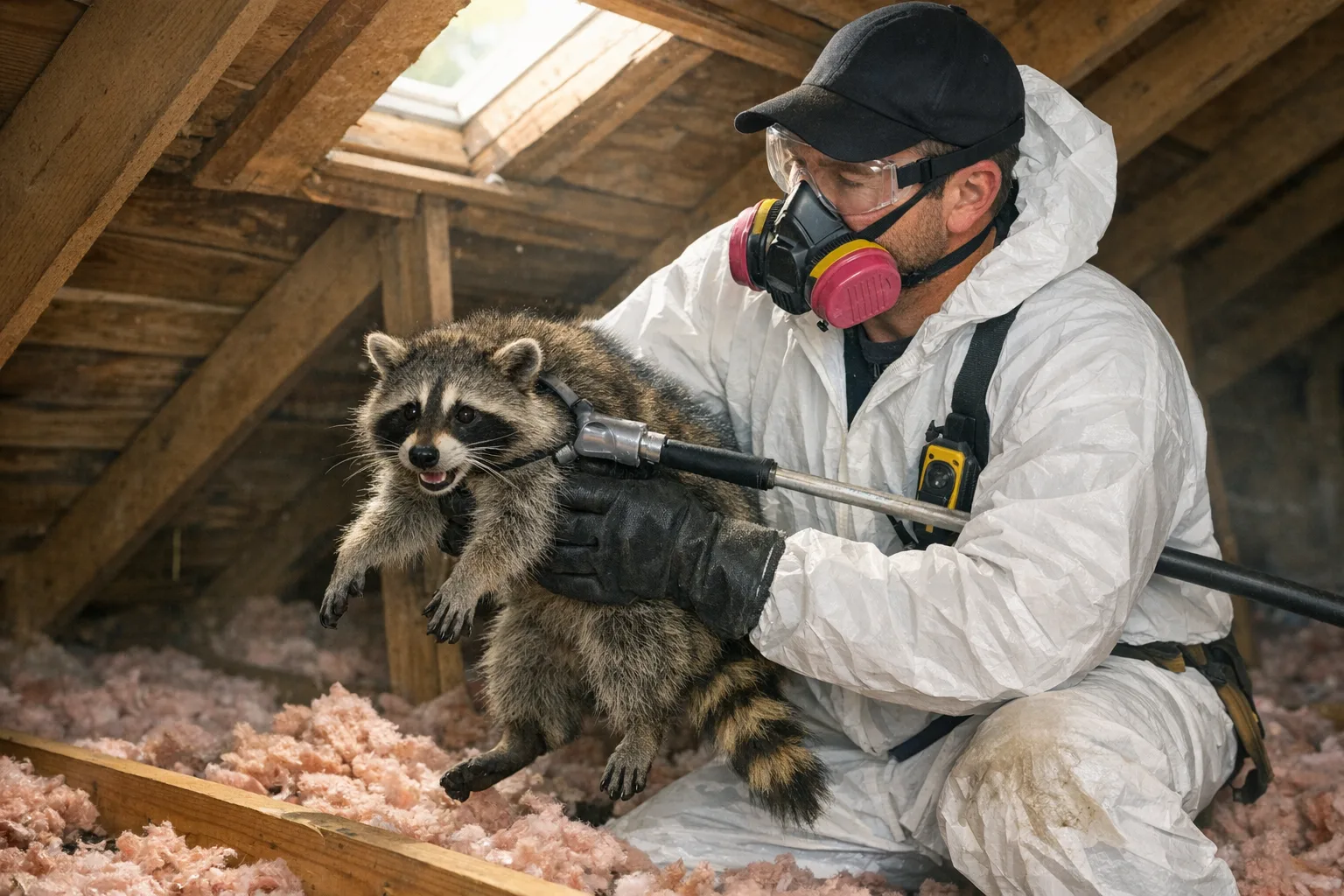
Wildlife removal services show some of the highest markups in the industry, partly due to the specialized equipment, licensing requirements, and liability concerns involved. Our research found wildlife removal margins frequently exceed 55%, with some companies reporting margins approaching 65% on smaller jobs.
| Wildlife Service | Average Price (2026) | Typical Cost Range | Mark Range |
|---|---|---|---|
| Raccoon removal (simple) | $250-$450 | $125-$225 | 50-55% |
| Raccoon removal (attic exclusion) | $600-$1,200 | $300-$600 | 50-52% |
| Squirrel removal | $350-$600 | $175-$300 | 50-52% |
| Bat exclusion | $400-$800 | $200-$400 | 50-52% |
| Opossum removal | $200-$400 | $100-$200 | 50-52% |
The wildlife removal category also involves significant regulatory compliance costs. Technicians handling bats or trapping larger mammals must carry specific licenses, and disposal fees add to overhead. For a comprehensive breakdown of what raccoon, squirrel, and bat removal actually costs, see our wildlife removal cost analysis.
The Franchise vs. Local Equation
One of the most consequential decisions consumers make when hiring pest control isn't which chemical to use—it's whether to hire a national franchise or a local independent company. Our research consistently shows meaningful price differences between these two categories.
Price Comparison: Franchise vs. Independent
| Service Type | Franchise Average | Independent Average | Savings with Local |
|---|---|---|---|
| Quarterly general treatment | $175-$225 | $135-$185 | $40-$90 per visit |
| Initial inspection | $75-$125 | $50-$85 | $25-$65 |
| Annual contract | $400-$550 | $300-$425 | $75-$150 per year |
| Single emergency visit | $200-$350 | $150-$275 | $50-$125 |
Over a three-year period with quarterly service, choosing a local independent company instead of a national franchise could save homeowners between $480 and $1,080. That differential represents pure price advantage, not a compromise in service quality. For a detailed comparison including what those savings actually buy, see our franchise vs. local pest control analysis.
Why the Margins Exist: The Business Reality
Understanding why pest control companies charge what they do requires appreciating the business model. The industry faces structural pressures that justify—though don't entirely excuse—steep markups.
Insurance and Liability
Pest control companies carry significant liability insurance because pesticide application in homes creates potential exposure to claims. A single lawsuit from misapplied chemicals or property damage can cost hundreds of thousands of dollars. General liability policies for pest control operators typically run $15,000-$30,000 annually, which must be amortized across service calls.
Licensing and Training
Every state requires pest control technicians to hold applicator licenses, which demand training hours and passing exams. Many technicians pursue additional certifications in specialized areas like termite control or wildlife removal. These credentials represent investment that companies recoup through pricing.
Equipment Depreciation
Professional-grade pesticide application equipment—backpack sprayers, dusters, bait stations, thermal monitoring tools—represents meaningful capital expense. A fully equipped service vehicle can carry $5,000-$15,000 in specialized equipment. Vehicle maintenance, fuel, and depreciation add substantially to operating costs.
The Reality Check
Despite these legitimate costs, Price-Quotes Research Lab observes that the pest control industry exhibits lower transparency than comparable home service sectors. HVAC companies, plumbers, and electricians typically provide itemized invoices showing labor hours and material costs. Pest control invoices more often arrive as flat fees, obscuring the value calculation. This opacity benefits companies more than consumers.
How to Tell If You're Being Overcharged
Not every high price represents overcharging. But certain indicators should raise red flags.
Warning Signs
- Prices 40%+ above regional averages: Our data suggests that legitimate pest control services rarely exceed local averages by more than 25%, even from premium providers.
- Refusal to provide itemized estimates: Reputable companies will explain what you're paying for, including chemical names and treatment areas.
- High-pressure tactics requiring immediate payment: Legitimate pest problems can wait 24-48 hours for you to compare quotes.
- Pricing that varies wildly between companies for identical services: Getting three quotes for termite treatment and receiving prices of $800, $1,400, and $2,200 for the same linear footage suggests either overcharging or inadequate scope definition.
- Un willingness to share chemical Safety Data Sheets: Technicians should readily provide information about what they're applying in your home.
Fair Pricing Indicators
- Written estimates with treatment scope clearly defined
- Willingness to explain chemical choices and alternatives
- Transparent about whether you're getting preventive or reactive treatment
- No charges for initial inspections (common among reputable companies)
- Pricing that aligns within 15-20% of regional averages
The Hidden Costs in Your Bill
Beyond the baseline markup, certain practices can inflate what you pay without adding proportional value.
Over-Spraying and Over-Treatment
Some companies recommend quarterly treatments regardless of actual pest pressure. If your home shows no evidence of activity between visits, you're paying for prevention you may not need. The EPA's Integrated Pest Management principles recommend treatment based on monitoring data rather than fixed schedules.
Chemical Upgrades and Add-Ons
Companies frequently offer "premium" chemical formulations at $20-$50 premiums per visit. In most cases, these are marketing distinctions rather than efficacy differences. Generic pyrethroids and brand-name equivalents containing identical active ingredients perform equivalently. The premium is for the brand experience, not superior results.
Annual Contracts with Automatic Renewal
Annual contracts can provide value through price predictability and convenience. However, automatic renewal clauses can lock you into pricing that becomes unfavorable as market rates change. Always negotiate contract terms and understand cancellation provisions.
What 40-60% Markup Actually Means for Your Budget
Let's ground this in practical terms. If you spend $400 annually on quarterly pest control treatments, approximately $200-$220 represents the company's margin. Your actual service delivery—chemicals and technician time—costs the company $180-$200.
Whether that $200 margin is "worth it" depends on your alternatives. You could purchase generic pesticides and apply them yourself for approximately $50-$75 per year in materials. You'd save $325 annually. But you'd invest your own time, accept higher application error risk, and handle pesticides without professional training.
The professional premium purchases expertise, convenience, and accountability. For many homeowners, that tradeoff makes sense. For others—especially those in newer homes with minimal pest pressure—annual professional service may represent unnecessary expense.
What to Do Next
Understanding pest control profit margins shouldn't leave you feeling helpless—it should empower you to make informed decisions. Here's how to apply what you've learned.
Before Your Next Service Call
- Get three bids for any service over $200. Pricing variation in this industry is significant enough that comparison shopping reliably surfaces better deals.
- Ask for chemical names and active ingredients. Reputable technicians will provide this information. Compare active ingredients, not brand names.
- Request itemized estimates. If a company won't tell you what you're paying for, consider that a warning sign.
- Negotiate. Many homeowners don't realize pest control pricing is often negotiable, especially for annual contracts or multi-service relationships.
- Check credentials. Verify applicator licenses through your state pesticide regulatory agency. Unlicensed applicators represent both legal and safety risks.
When You Receive Your Bill
- Compare the total against regional averages from multiple sources
- Request an itemized breakdown if you received a flat fee
- Ask what chemical was applied and why that specific treatment was chosen
- Inquire about follow-up services and whether they're included
Long-Term Strategy
Consider whether you actually need the frequency of service you're paying for. Quarterly preventive treatments make sense in high-pest-pressure areas or older construction. If you've had no pest activity in two years, semiannual or even annual service might suffice—ask your provider if they'd offer a reduced-frequency plan.
Price-Quotes Research Lab observes: The pest control industry's markup structure is unlikely to change significantly in the near term. However, consumer awareness creates negotiating leverage. Companies facing informed customers who comparison shop are more likely to offer competitive pricing than those serving customers who accept the first quote. Your knowledge is an asset—use it.
For more information on comparing pest control providers and understanding what your money actually buys, explore our full library of pricing research and consumer guides. Making informed decisions about pest control services starts with understanding the economics—and now you do.