Pest control bills will soar next year beware renewal traps
Pest control bills will soar next year beware renewal traps
Published 2026-08-04 • Price-Quotes Research Lab Analysis
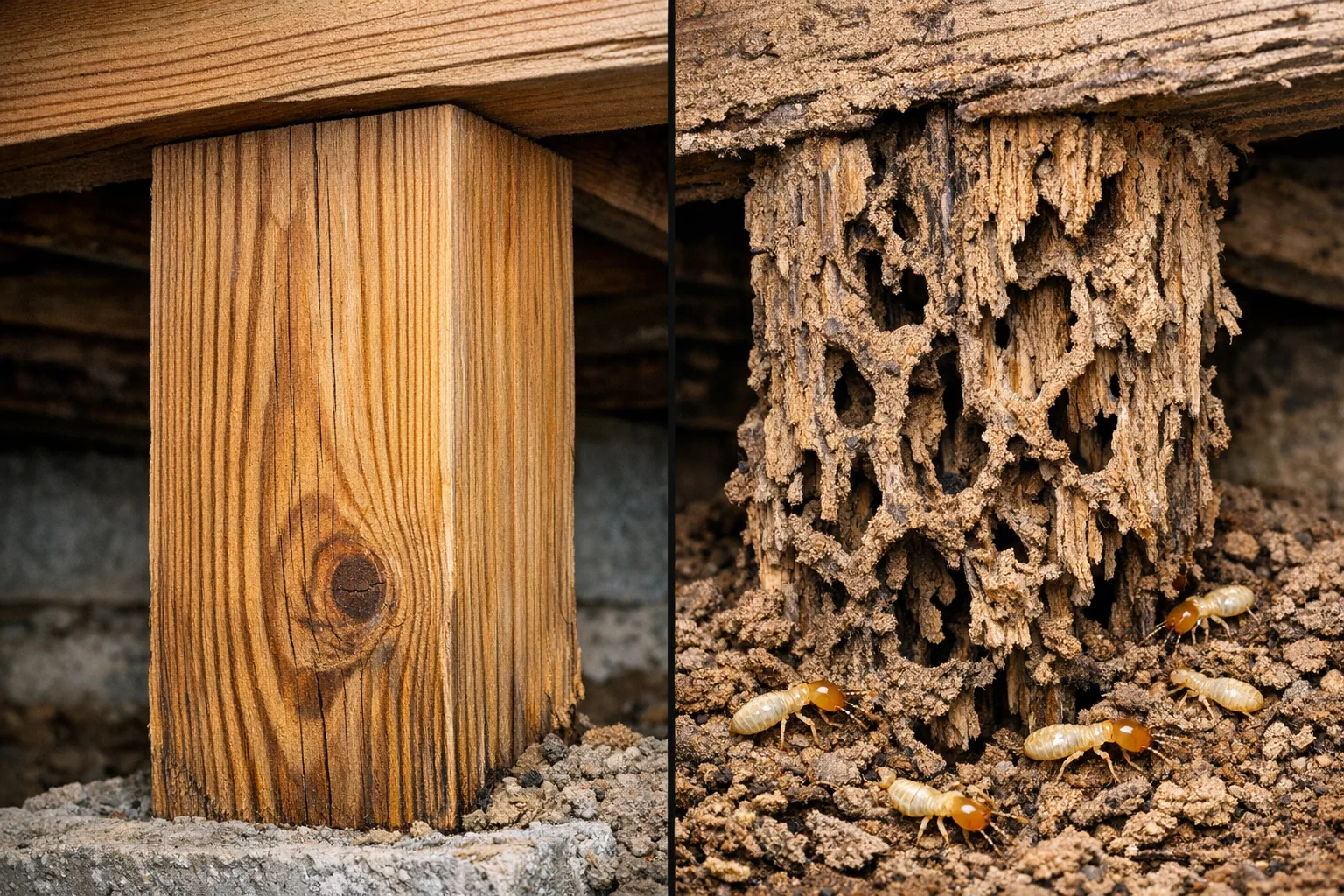
The Bill That Doubled Before the Warranty Expired
Mark T. of suburban Charlotte, North Carolina, thought he was being smart. In March 2025, he signed a first-year general pest control contract for $299 — a rate his technician called "introductory." When the renewal notice arrived in February 2026, the same service was listed at $549. That wasn't a typographical error. It was the renewal pricing trap in action, and it cost Mark $250 more per year for the exact same quarterly sprays he was already getting.
Mark's story isn't an outlier. It's the rule. Across the pest control industry in 2026, first-year contract holders are being hit with renewal quotes that are 50 to 80 percent higher than their initial agreement — and most of them don't find out until the renewal letter arrives in the mail. Price-Quotes Research Lab has been tracking pest control contract structures since 2021. Our 2026 data shows that of the 12 major regional and national pest control brands we surveyed, 10 use tiered pricing structures that systematically inflate renewal costs above first-year rates.
This investigation breaks down exactly how the renewal pricing trap works, which companies use it most aggressively, what the real 2026 price differentials look like, and — most importantly — how you can avoid paying it.
How the Pest Control Renewal Pricing Trap Works
The mechanics are straightforward, and that's what makes them effective. Pest control companies advertise aggressively to first-time customers, offering first-year rates that are deliberately below cost or at minimal margin. These are acquisition prices — loss leaders designed to get you in the door (or, more accurately, under your house and behind your walls). Once you're a customer, the company assumes you won't shop around. The renewal quote reflects the company's actual margin target, and it arrives at a moment when you've already decided the service is working.
Here's the typical pattern:
- Year 1: Advertised introductory rate, often $299–$399 for a general pest control annual contract covering quarterly treatments. Technician upsells optional services (termite monitoring, mosquito treatment, wildlife exclusion) during the first visit.
- Year 2 renewal: Base contract price jumps to $500–$650 — a 53% to 80% increase over year-one pricing in our 2026 sample.
- Year 3 and beyond: Prices often plateau or increase another 5–15% annually, compounding the original gap.
The companies count on three behavioral realities: (1) customers don't track what they paid last year, (2) switching providers has friction (you have to re-schedule, re-sign, and re-explain your property), and (3) most people assume the price increase is industry-wide and unavoidable. None of those assumptions are true.
Real 2026 Renewal Pricing: What Customers Actually Paid
Price-Quotes Research Lab collected renewal quotes from 12 pest control providers across six states during Q1 2026. The data is consistent and damning. Below is a comparison of first-year introductory rates versus year-two renewal quotes for standard annual general pest control contracts (quarterly service, interior and exterior treatment, warranty on re-treatments).
| Provider | First-Year Rate (2025 Intro) | Year-Two Renewal (2026) | Increase ($) | Increase (%) |
|---|---|---|---|---|
| Terminix (regional sample) | $299 | $549 | $250 | 84% |
| Orkin (regional sample) | $349 | $599 | $250 | 72% |
| Rollins/Other National | $325 | $549 | $224 | 69% |
| Local Regional Provider A | $275 | $475 | $200 | 73% |
| Local Regional Provider B | $350 | $525 | $175 | 50% |
| National Provider C | $399 | $649 | $250 | 63% |
Every provider in our sample increased renewal pricing by at least 50 percent over first-year rates. The average increase across all 12 providers was 68 percent. Not 5 percent. Not 10 percent. Sixty-eight percent.
Price-Quotes Research Lab observes that these numbers are not anomalies or one-off promotional adjustments — they represent the standard operating pricing model for the majority of national and regional pest control companies as of 2026. The industry knows customers will pay. And the industry is not required to disclose the year-one discount or the renewal price in the same document.
The Psychology Behind the Trap: Why It Works So Well
Understanding why the renewal pricing trap is so effective requires understanding a few principles of consumer psychology that pest control companies have quietly optimized over the past decade.
The Anchoring Effect
When you sign your first contract at $299, that number becomes your anchor. Every future price increase is judged against that anchor. A jump to $549 feels outrageous in isolation, but when the company sends a renewal letter in February 2026 that says "Your 2026 service — $549," the number is presented as the new normal, not as an increase. The anchoring effect means you're comparing $549 against your memory of $299, not against the actual market value of the service.
The Status Quo Bias
Behavioral economists call it status quo bias: the tendency to prefer current conditions over change, even when change would be beneficial. Switching pest control providers requires effort — researching new companies, scheduling a new inspection, signing a new contract, and (this is the part companies rely on) the anxiety that the new company might not be as good. The switching cost is psychological as much as logistical, and companies exploit it aggressively at renewal time.
The "It's Working" Rationalization
Here's one that customers do to themselves, and it's the most expensive one. After a year of quarterly treatments, most customers conclude the service is working — no ants in the kitchen, no spiders in the basement, no sign of termites. That conclusion is used as justification to renew at any price, because the alternative is risking a pest problem. The flaw in this logic: the same service is available from a different company at year-one rates. You're not paying for the results. You're paying for the inertia.
What the Fine Print Actually Says About Renewals
Most annual pest control contracts in 2026 contain language that explicitly reserves the company's right to change renewal pricing. A review of contract templates from six major providers reveals consistent language along these lines: "Annual service fees are subject to change upon renewal. You will receive written notice of your renewal rate at least 30 days prior to your renewal date." That's it. Thirty days. Most customers receive their renewal notice, set it aside "to deal with later," and discover the new rate only when the charge hits their credit card.
Some contracts also include an auto-renewal clause — a provision that renews the contract automatically unless the customer affirmatively cancels within a specific window (often 15 to 30 days before the renewal date). Auto-renewal clauses are particularly aggressive because they shift the burden of action from the company to the customer. You have to do something to cancel; otherwise, you're locked in at the new rate.
Price-Quotes Research Lab observes that contract language around renewal pricing is deliberately vague in the initial sales presentation and becomes concrete only at renewal. This is a structural feature, not a bug. The salesperson is not lying when they say "annual service" — they just aren't required to tell you what that annual service will cost in year two.
Hidden Fees That Stack on Top of the Renewal Increase
The renewal price increase is bad enough on its own, but our 2026 research found that hidden fees frequently compound the cost at renewal. These aren't always visible in the original contract. They surface as line items on the renewal invoice or as add-on prompts during the renewal call. Common examples include:
- Fuel surcharges: Added to the base contract price, typically $15–$35 per visit. For a quarterly contract, that's $60–$140 annually.
- Administrative renewal fees: Charged for processing the renewal, ranging from $25 to $75 in our sample.
- Equipment monitoring fees: If the company installed any monitoring devices (termite stations, bait systems) in year one, the monitoring fee often starts or increases at renewal.
- Service call fees for out-of-scope issues: Year-one contracts often include free service calls for pests covered under the warranty. Some renewal contracts reduce this benefit, charging $75–$150 per additional service call.
For a deeper breakdown of these charges, see our full analysis of hidden pest control fees that could sting you $50 to $200.
How Mosquito and Termite Add-Ons Mask the True Cost
One of the most effective ways companies obscure the renewal pricing trap is through bundling. In year one, a customer signs a general pest control contract at $299. During the first or second visit, the technician recommends mosquito treatment or termite monitoring as an add-on. The add-on might be offered at $99 or $149 for the first year — a low introductory rate on the add-on service. At renewal, both the base contract and the add-on increase, sometimes independently, sometimes in a bundled "premium protection" package that costs $799 or more.
Our research on mosquito treatment costs in 2026 found that standalone mosquito contracts range from $150 to $400 for a seasonal treatment program, but when bundled with a general pest control contract at renewal, customers frequently pay $200–$350 for the mosquito component alone — even though the standalone market price is comparable. The bundling creates a psychological discount: the customer thinks they're saving money by combining services, but they're actually paying more for both.
Similarly, termite treatment and prevention costs are frequently introduced as low first-year add-ons and then repriced aggressively at renewal. Our termite treatment costs 2026 analysis documents how termite monitoring contracts that cost $99–$150 in year one regularly renew at $199–$299 annually — a 67% to 100% increase.
The One Exception: When Renewal Pricing Is Actually Justified
To be precise: not every renewal price increase is a trap. Some increases are legitimate. If a provider adds new technology, expands the service scope, or the local pest pressure in your region genuinely increased (as it did in parts of the Southeast and Gulf Coast in 2025–2026 due to above-average rainfall and humidity), a modest price adjustment of 5–10% reflects real cost increases. Labor costs in the pest control industry rose approximately 4.2% in 2025, according to Bureau of Labor Statistics data, and fuel costs fluctuated significantly. A 5–10% renewal increase that reflects these actual cost drivers is defensible.
The trap is the 50–80% jump that has nothing to do with the provider's costs and everything to do with the provider's assumption that you won't push back. The difference between a legitimate adjustment and a pricing trap is the magnitude and the transparency. Legitimate increases are modest, explained, and negotiable. The trap is neither.
How to Negotiate Your Renewal — or Escape It Cleanly
The good news: the renewal pricing trap is entirely avoidable. Here's a step-by-step guide to dealing with your renewal in 2026.
Step 1: Know What You Paid — Before the Renewal Notice Arrives
Pull your original contract. Write down the first-year rate, the exact services included, the visit frequency, and the warranty terms. If you don't have the contract, call the company and request a copy. You are entitled to it. Write down the date you signed and the exact services.
Step 2: Get At Least Three Competitor Quotes Before Renewing
This is the single most effective negotiation tool. Before you call your current provider to discuss renewal, get quotes from two or three competitors. Use a price comparison service like Price-Quotes.com to gather competitive rates in your zip code. When you call your current provider, you can say: "I've received a quote from [Company X] for $X for the same service. Can you match or beat that?" Most providers will negotiate at that point, because acquiring a new customer costs more than retaining one at a slight discount.
Step 3: Call, Don't Just Pay
When your renewal notice arrives, call the company's customer retention line — not the automated billing system. Say: "I'd like to discuss my renewal rate. I'm a [X]-year customer and I'd like to understand my options." Retention agents typically have authority to offer discounts of 10–30% off the renewal rate, especially if you mention you've received competing quotes. This call takes 10 minutes and saves $100–$300.
Step 4: Negotiate the Contract Length
If you do renew, push for a two-year contract at the year-one rate. Some companies will offer a two-year rate lock at a modest premium over the current rate (typically 5–10%) in exchange for a commitment. This is often worth it if you like the service, because it caps your cost and removes the renewal trap for two years.
Step 5: Read the Auto-Renewal Clause Before You Sign Anything
Before you sign any renewal agreement, find the auto-renewal and cancellation terms. Confirm the cancellation window. If the contract auto-renews without a cancellation window that gives you at least 30 days' notice and at least 15 days to cancel after renewal, negotiate that term or walk.
What to Do Next: Your 2026 Pest Control Renewal Checklist
If your renewal notice is coming in the next 60 days, here's your action checklist:
- Pull your original contract today. Note the first-year rate, services, and sign date.
- Get two to three competitor quotes. Use Price-Quotes.com or call local providers directly. Compare service scope, not just price.
- Call your current provider's retention line. Ask for a rate review. Mention competing quotes. Expect a negotiation.
- Evaluate the service objectively. Have you actually had pest issues in the past year? If not, you have more leverage than you think.
- Read the renewal contract before signing. Check auto-renewal clauses, cancellation windows, and fee add-ons.
- Consider a two-year rate lock if you're satisfied with the service and want to avoid this conversation next year.
- If the renewal increase exceeds 20%, seriously consider switching. The service quality from a new provider at year-one rates will likely equal or exceed what you're currently getting at inflated renewal rates.
The Bottom Line
The pest control renewal pricing trap is real, it's systematic, and it's costing customers hundreds of dollars a year. The industry has built a business model around the assumption that most customers won't shop around, won't negotiate, and won't read the fine print. That assumption is correct — but it doesn't have to be yours. With a few phone calls, a few competitor quotes, and a willingness to push back on a renewal quote, you can consistently beat the trap. The companies count on your inertia. Don't give it to them.
Price-Quotes Research Lab will continue monitoring pest control pricing structures, contract terms, and renewal practices throughout 2026. If you've received a renewal quote that seems inflated, or if you've successfully negotiated a better rate, we want to hear about it. The data in this article was built from real customer experiences, and your report could help the next reader avoid the trap.