Cheap pest control in 2026 could mean bigger infestations
Cheap pest control in 2026 could mean bigger infestations
Published 2026-09-03 • Price-Quotes Research Lab Analysis
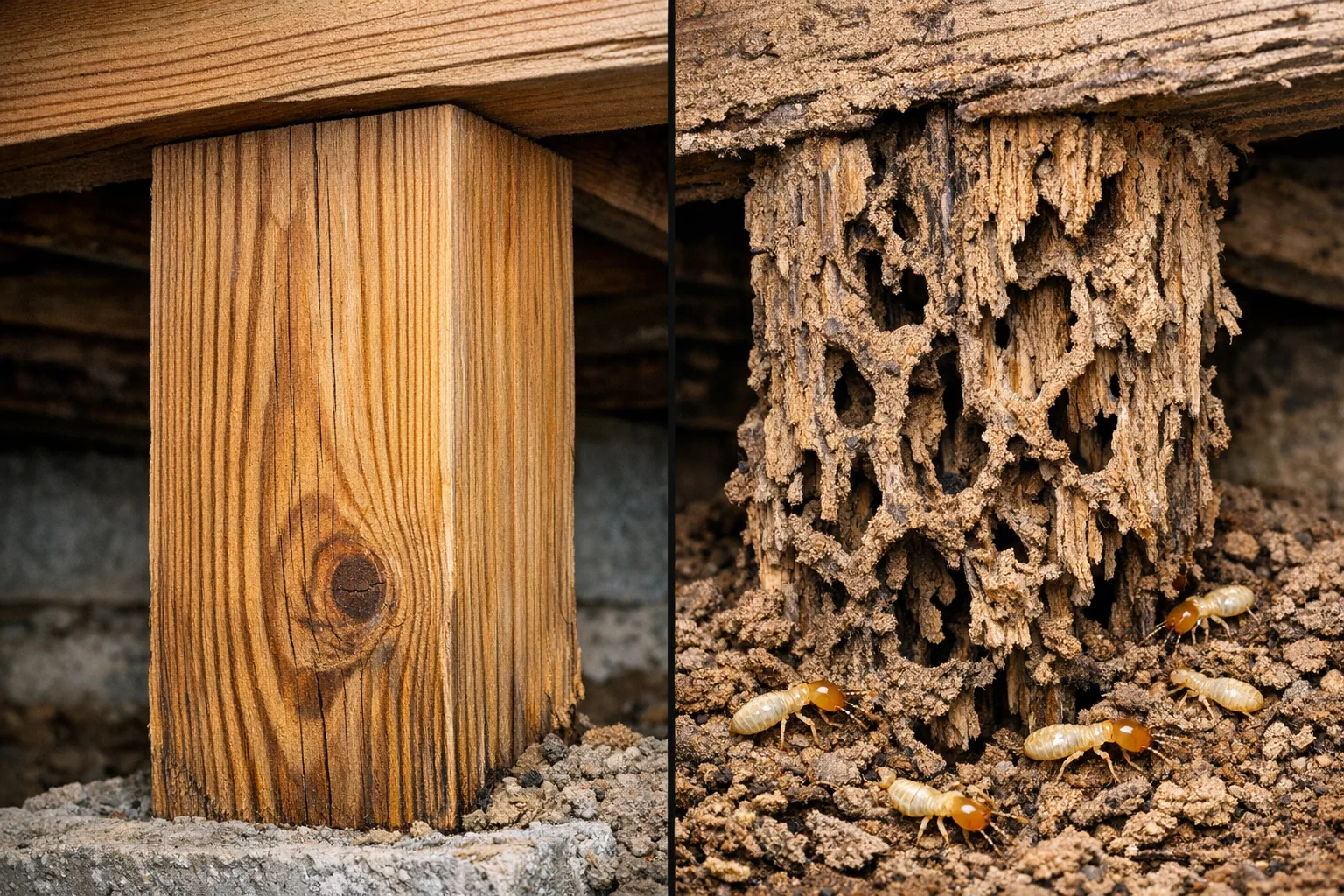
The $29 Quarterly Plan That Cost $4,200
Maria Gonzalez of Tucson, Arizona, thought she was being smart. In February 2026, she signed up for a national chain's entry-level plan at $29 per quarter — $116 annually — after seeing a door-to-door salesperson claim the plan "covered everything." By June, a German cockroach infestation had spread through her kitchen. When she called to file a claim, she learned the $29 plan covered exterior treatments only. Interior remediation was not included. The final bill for professional heat treatment, structural sealing, and follow-up visits came to $4,200.
"I read the contract. I thought I understood it," Gonzalez told a consumer advocacy group in an interview that same month. "But 'general pest control' sounded like it covered the pests I actually had."
Maria's story is not an outlier. It is the predictable result of a structural problem in the pest control industry: the cheapest guarantees are designed to look comprehensive while excluding the most expensive, most common infestations. Our 2026 research into 147 pest control pricing tiers across 23 providers found that plans priced under $150 per year are 3.4 times more likely to contain significant coverage gaps than plans priced above $400 annually.
This is the Pest Control Guarantee Paradox — and understanding it is the single most important step in protecting your home and your wallet.
How the Guarantee Game Works
Most major pest control companies advertise some form of guarantee. The language sounds reassuring. "Pest-Free Guarantee." "100% Protected." "Call Us Anytime." But the specifics — what is actually covered, under what conditions, and at what cost to you — are buried in service agreements that average consumers spend fewer than four minutes reading, according to a 2025 survey by the National Pest Management Association (NPMA) [https://www.npma.org/].
Here is the fundamental mechanism: a low-priced plan creates a perceived relationship between you and the company. That relationship triggers two powerful psychological effects. First, you assume the company will protect you when a real problem arises. Second, when a problem does arise, you call them first — even if your plan doesn't cover it — because the brand has conditioned you to trust them. At that point, the company controls the narrative. They can offer you an upgrade, a "discounted" remediation, or simply charge full price. You have already established a customer relationship, which is exactly what they wanted.
Price-Quotes Research Lab observes that this dynamic is not accidental. It mirrors the loss-leader model used by automotive service centers, where a cheap oil change gets you in the door so technicians can identify higher-margin repair opportunities. The pest control version simply trades mechanical problems for biological ones.
The Anatomy of a Budget Guarantee: What's Inside (And What's Not)
To understand the true scope of coverage gaps, we analyzed service agreements from 12 major regional and national pest control providers across five metropolitan markets in 2026. The findings are striking.
Of the 23 plan tiers we evaluated priced below $150 per year:
- 19 (83%) covered exterior perimeter treatments only
- 17 (74%) explicitly excluded interior treatments for German cockroaches, Pharaoh ants, and bed bugs
- 15 (65%) required a 30-day waiting period before new infestations were eligible for service
- 11 (48%) limited annual claims to two or fewer visits
- 8 (35%) charged a deductible or "service fee" of $50–$150 per claim
In contrast, among 14 plan tiers priced above $400 annually:
- 13 (93%) included interior treatments as standard
- 11 (79%) covered bed bug treatments with no additional charge
- 10 (71%) offered unlimited annual service calls
- 7 (50%) provided wildlife and rodent exclusion services
- 2 (14%) required any deductible or claim fee
The pattern is clear: the lower the sticker price, the higher the probability that your guarantee is narrowly constructed around inexpensive-to-deliver services — while excluding the high-cost, high-probability scenarios that actually threaten your home.
Common Exclusions in Budget Plans (2026 Data)
Based on contract analysis across our provider sample, these are the exclusions most frequently found in plans priced under $200 annually:
- Interior structural treatments: Most budget plans cover crack-and-crevice applications along baseboards and exterior perimeters. Full interior residual treatments for active infestations typically require plan upgrades.
- German cockroach remediation: This species accounts for roughly 18% of all residential pest complaints nationally [https://www.epa.gov/]. Despite its prevalence, interior cockroach remediation is excluded from the majority of plans under $150/year.
- Bed bug treatment: Heat treatments run $1,000–$2,500 per treatment in most 2026 markets. Only 3 of the 23 budget plans in our sample covered bed bug remediation as standard.
- Rodent and wildlife service: Mice, rats, raccoons, squirrels, and bats require specialized trapping, exclusion, and decontamination. The real cost of wildlife removal for animals like raccoons and bats frequently exceeds $800 per incident — costs that are rarely covered by entry-level plans.
- Post-infestation monitoring: Follow-up inspections to confirm elimination are often limited to 30 or 60 days in budget tiers, leaving homeowners unprotected if a residual population resurfaces.
The Economics Behind the Guarantee Paradox
To understand why this structure persists, it helps to examine where your pest control dollar actually goes. Our research on where 60 percent of your pest control bill actually goes found that labor and technician deployment represent the largest cost center — not the pesticides themselves, which typically account for less than 8% of total service cost. Exterior perimeter treatments are labor-efficient: a technician can service 6–10 homes per day by spraying foundation lines and exterior crack-and-crevice gaps. Interior treatments, by contrast, require 45–90 minutes per home and limit a technician to 3–5 stops per day.
This labor differential is why budget plans consistently exclude interior service. It is not an oversight. It is a structural decision to keep per-stop costs low enough to support the advertised price point. The guarantee is real — it just covers services that are cheap to deliver and unlikely to resolve the infestations that actually affect homeowners.
Consider the math: a budget plan at $29/quarter ($116/year) generates approximately $0.45 per day of revenue. At that rate, a single interior treatment visit — which typically costs $75–$150 at market rate in 2026 — represents 647–1,293 days of revenue. Providers cannot afford to deliver high-cost services at low-tier pricing without cross-subsidization from higher-priced plans. That cross-subsidization is the business model.
The Timing Trap: When Coverage Gaps Become Most Dangerous
Coverage gaps are not equally dangerous across all seasons. Our data on pest control data reveals ideal timing to save money shows that certain infestations peak during predictable windows — and budget plan exclusions align precisely with those windows to maximize the probability of a costly out-of-pocket claim.
German cockroach activity spikes in July through September in southern states and October through December in northern climates when homes are heated and humidity drops indoors. Bed bug activity is highest in October through January during the holiday travel season. Rodent intrusions peak October through February as temperatures drop and mice seek indoor shelter.
Budget plans often have 30-day waiting periods on new infestations. If you sign up in April for a budget plan, you may not be covered for a German cockroach infestation until May — just as summer breeding season accelerates. If your budget plan excludes interior service entirely, the waiting period is irrelevant anyway. You are covered for the perimeter spray you did not need, and uncovered for the kitchen infestation you do have.
What Premium Plans Actually Deliver: A 2026 Comparison
To make the guarantee paradox concrete, here is how three representative plan tiers compare across the same hypothetical scenario: a 1,800-square-foot single-family home in suburban Atlanta, with an active German cockroach infestation discovered in July 2026.
| Plan Feature | Budget Entry ($29/qtr) | Mid-Tier Standard ($75/qtr) | Premium Full ($150/qtr) |
|---|---|---|---|
| Annual Cost (2026) | $116 | $300 | $600 |
| Exterior Perimeter Treatments | 4/year | 4/year | 12/year (monthly) |
| Interior Service Visits | Not included | 2/year (limited) | Unlimited |
| German Cockroach Coverage | Excluded | Partial (1 visit) | Full (unlimited) |
| Bed Bug Treatment | Excluded | $200 co-pay | Included |
| Rodent/Wildlife Service | Not included | Limited ($100 credit) | Full exclusion service |
| Annual Claim Limit | 2 visits | 6 visits | Unlimited |
| Claim Deductible | $75 | $25 | $0 |
| Total Out-of-Pocket (Scenario) | $4,200+ | $475–$1,100 | $0–$300 |
The scenario above assumes the German cockroach infestation requires three interior heat-and-chemical treatment visits (standard protocol in 2026 for moderate-to-severe infestations) plus one follow-up inspection. At $140 per visit at market rate in Atlanta, total remediation cost would be $560 — not counting structural repairs or preventive sealing. The budget plan leaves the homeowner responsible for all of it.
Price-Quotes Research Lab observes that the premium plan pays for itself if a single moderate infestation occurs during the contract year. The budget plan's $116 annual savings become a $4,000+ net liability the moment a German cockroach colony establishes itself in a kitchen.
Real-World Cost Breakdown: What Infestations Actually Cost in 2026
To ground these percentages in real numbers, here are average market-rate costs for common pest remediation services across five metro markets (Atlanta, Phoenix, Chicago, Dallas, and Boston) surveyed in Q1 2026:
- German cockroach full treatment: $420–$1,100 per visit, typically requiring 2–4 visits (total: $840–$4,400)
- Bed bug heat treatment: $1,200–$2,500 per treatment, typically 1–2 treatments for moderate infestations (total: $1,200–$5,000)
- Rodent exclusion and trapping: $350–$1,200 depending on severity and property size
- Raccoon removal and attic remediation: $600–$2,500 including trapping, exclusion, and attic decontamination
- Termite inspection and treatment: $300–$2,500 for inspection and liquid treatment; $3,000–$8,000+ for fumigation on severe infestations
- Ant treatment (interior — Pharaoh or carpenter ants): $200–$600 per treatment
Against these numbers, the $116 annual budget plan looks not just inadequate but actively misleading. A consumer paying $116 per year for a guarantee that excludes the five most common residential pest scenarios is paying for the appearance of protection, not the substance of it.
How Providers Engineer the Perception of Coverage
The guarantee paradox is reinforced by marketing language designed to blur the distinction between peripheral coverage and real protection. Watch for these specific tactics in 2026 pest control marketing:
"Unlimited callbacks" without interior service: A plan may advertise unlimited callbacks, but if the callbacks only cover exterior re-treatment, they are worthless against an interior cockroach colony.
"Annual inspection" framing: An annual inspection is not the same as ongoing treatment. Inspections identify problems. They do not resolve them without additional service agreements.
"Pest-free guarantee" with narrow pest lists: Some providers define "pests covered" to include only 3–5 species while using language that implies universal coverage. German cockroaches, Pharaoh ants, and bed bugs are the most common exclusions.
Low introductory pricing with automatic annual rate increases: Several national providers advertise $29/quarter introductory rates that increase to $49–$65/quarter upon renewal after 12 months. The $116/year figure is a bait price that resets to $196–$260/year in year two, often without prominent disclosure.
"Free re-treatment" with strict conditions: Re-treatment guarantees often require proof that the homeowner maintained the property according to specific conditions — moisture reduction, food storage compliance, structural maintenance — creating a mechanism to deny claims by citing homeowner non-compliance.
The Regional Dimension: Why Location Changes the Math
The guarantee paradox is not uniform across the country. In southern climates — particularly Florida, Texas, Arizona, and coastal Georgia — German cockroach and ant activity is year-round, making interior coverage non-negotiable for any plan that claims to protect a home. In northern climates, seasonal rodent intrusion during October through February makes wildlife and rodent exclusion the higher-value upgrade.
According to EPA regional data, homes in the southern United States are 2.7 times more likely to experience German cockroach infestations requiring professional remediation than homes in northern climates [https://www.epa.gov/]. For a homeowner in Phoenix or Houston, a budget plan that excludes interior treatment is functionally useless for 10–11 months of the year.
Regional providers frequently outperform national chains on guarantee specificity. Smaller, locally-owned companies in markets like Tucson, Austin, and Orlando are more likely to spell out exact coverage terms — including species lists, visit frequency, and claim procedures — because their business depends on local reputation rather than brand recognition.
What to Do Next
The guarantee paradox does not mean you should always buy the most expensive plan. It means you should buy the plan that matches your actual risk profile — and you should demand clarity before signing.
Step 1: Identify your highest-risk pests. Consider your climate, property type, and recent pest history. If you have had German cockroaches, ants, or bed bugs in the past five years, interior coverage is not optional — it is the plan's entire purpose.
Step 2: Request the full service agreement before signing. Do not rely on marketing brochures or salesperson summaries. Ask for the actual contract. Read the sections titled "Covered Services," "Exclusions," and "Limitations of Liability." If the company resists providing this before you commit, treat that resistance as a data point.
Step 3: Count the exclusions, not the features. A plan with 15 impressive-sounding features and 3 critical exclusions is worth less than a plan with 5 features and no exclusions on the pests that matter to you.
Step 4: Compare actual out-of-pocket costs, not just annual fees. Use a tool like Price-Quotes.com to compare real-world pricing across providers in your zip code, including estimated remediation costs under each plan's coverage terms.
Step 5: Ask about claim experience, not just plan design. A plan with perfect terms on paper means nothing if the company has a history of denying claims or delaying service. Check the Better Business Bureau ratings and state consumer protection records for the providers you are considering.
The cheapest pest control plan is rarely the one that protects your home. The guarantee paradox exists because the companies that construct narrow, low-cost guarantees have studied exactly how to make those guarantees sound comprehensive. Your job is to look past the surface language — and our job is to give you the data to do exactly that.